The original version of this post was written to emphasise the Neptune movement of the suite, to tie into the Tales of the Sea giveaway I was involved in at the beginning of 2024.
Neptune being, of course, the Roman god of the Sea…
Now, fair warning that most of the links to the various mythological figures I’ll be mentioning this post are potentially NSFW, given that the Greeks and Romans tended not to depict those figures wearing clothes…
Ahem.
With said Tales of the Sea Giveaway over, I can now focus more on the whole of Gustav Holst‘s Planets, which is pretty fitting, given that Holst himself insisted that The Planets be taken as a unified whole, rather than chopped up into snippets…
In brief, Gustav Holst was an English composer, roughly contemporary, though somewhat younger than other famous composers like Wagner, Strauss, and Claude Debussy.
His inspiration to compose The Planets came from a discussion of astrology with some friends, leading to a seven-movement suite based on the mythological and astrological significance of the seven planets other than Earth known to science at the time — The Planets was composed between 1914 and 1917, Pluto was discovered in 1930 (which Holst did live to see, though he had no interest in revisiting the suite by then) and demoted to Dwarf Planet in 2006.
And if I may quote myself for a moment:
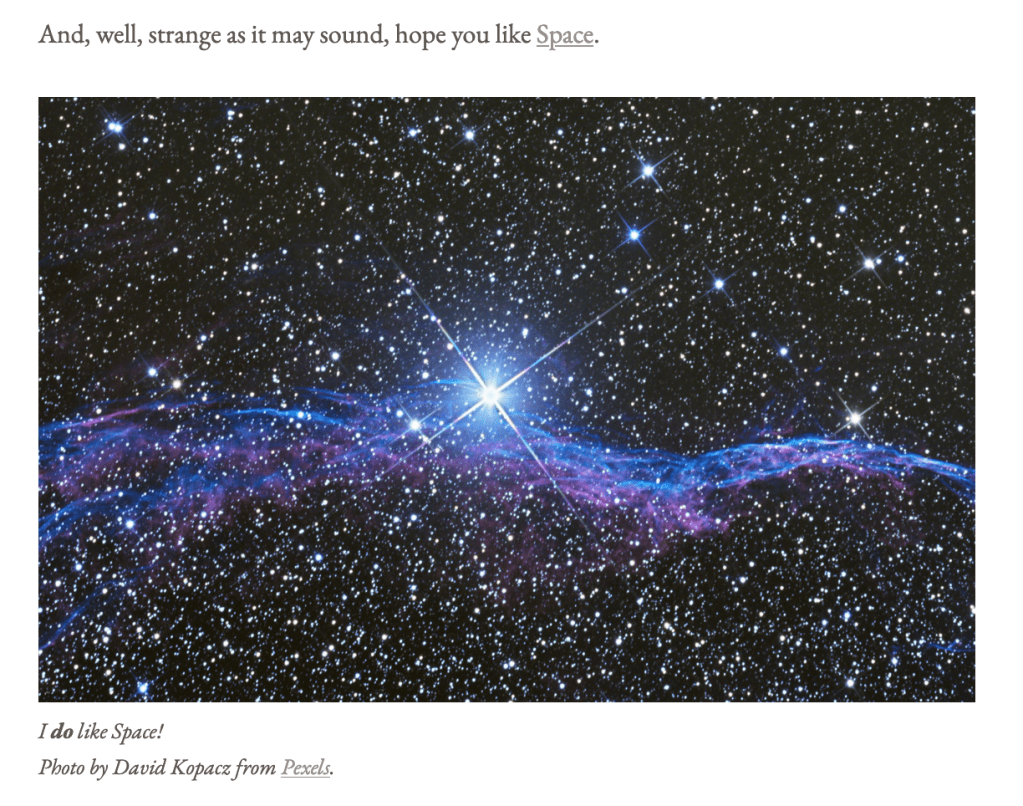
But, seriously, though. I do like Space…
The movements of the suite are:
- Mars, the Bringer of War — bombastic and militaristic, which I’m sure John Williams quoted in at least a couple places in Star Wars.
- Venus, the Bringer of Peace — kinder and gentler to serve as a counterpoint to Mars, fitting in a way, given that Mars and Venus were an item in the myths; ironic in another way, given that on Venus, it rains acid…
- Mercury, the Winged Messenger — the shortest and the fastest-paced of the movements, but also high-pitched and musically kinda all over the place, fitting for the god whose job is to be all over the place.
- Jupiter, the Bringer of Jollity — bombastic, but in a different way than Mars to emphasise Jupiter as the god of hospitality (as opposed to say, a total jerk, which is also mythologically-accurate), also quotes British patriot music to connect with Jupiter’s role as god of the Fatherland.
- Saturn, the Bringer of Old Age — sombre, melancholy, and introspective, a reference to Saturn’s role as god of Time, specifically natural cycles, especially those related to agriculture.
- Uranus, the Magician — fairly chaotic, as perhaps befits a primordial god, but eventually brought to order — as if, Wikipedia notes, with the wave of a magic wand — again, perhaps befitting a creator god responsible for helping to order the raw chaos of the early cosmos.
- Neptune, the Mystic — probably the one with the least mythological basis, but the one that makes the most astronomical sense, the movement represents Neptune as it was known at the time: basically the mysterious edge of the known Universe and therefore an object of mystery of fascination.
So, basically, what I’m saying this that is the best artistic examination of the Solar System not named Sailor Moon…

Eh. Close enough…
Sailor Moon: Toei Animation. Original English dub licensed to Dic Entertainment. Dic library now owned by WildBrain.
And you can listen to it here:
The official Music to Write Realmgard to playlist has been updated to include this latest entry:
Follow me here:
If you’ve enjoyed my content, please consider supporting me through Ko-fi or Patreon, or through Paypal by scanning the QR code below:

Follow Realmgard and other publications of Emona Literary Services™ below:
Subscribe to the Emona Literary Services™ Substack newsletter here.

This work is licensed under a Creative Commons Attribution-NonCommercial-NoDerivatives 4.0 International License.
The author prohibits the use of content published on this website for the purposes of training Artificial Intelligence technologies, including but not limited to Large Language Models, without express written permission.
All stories published on this website are works of fiction. Characters are products of the author’s imagination and do not represent any individual, living or dead.
The realmgard.com Privacy Policy can be viewed here.
Realmgard is published by Emona Literary ServicesTM
