King Thibault II of Gallicantu
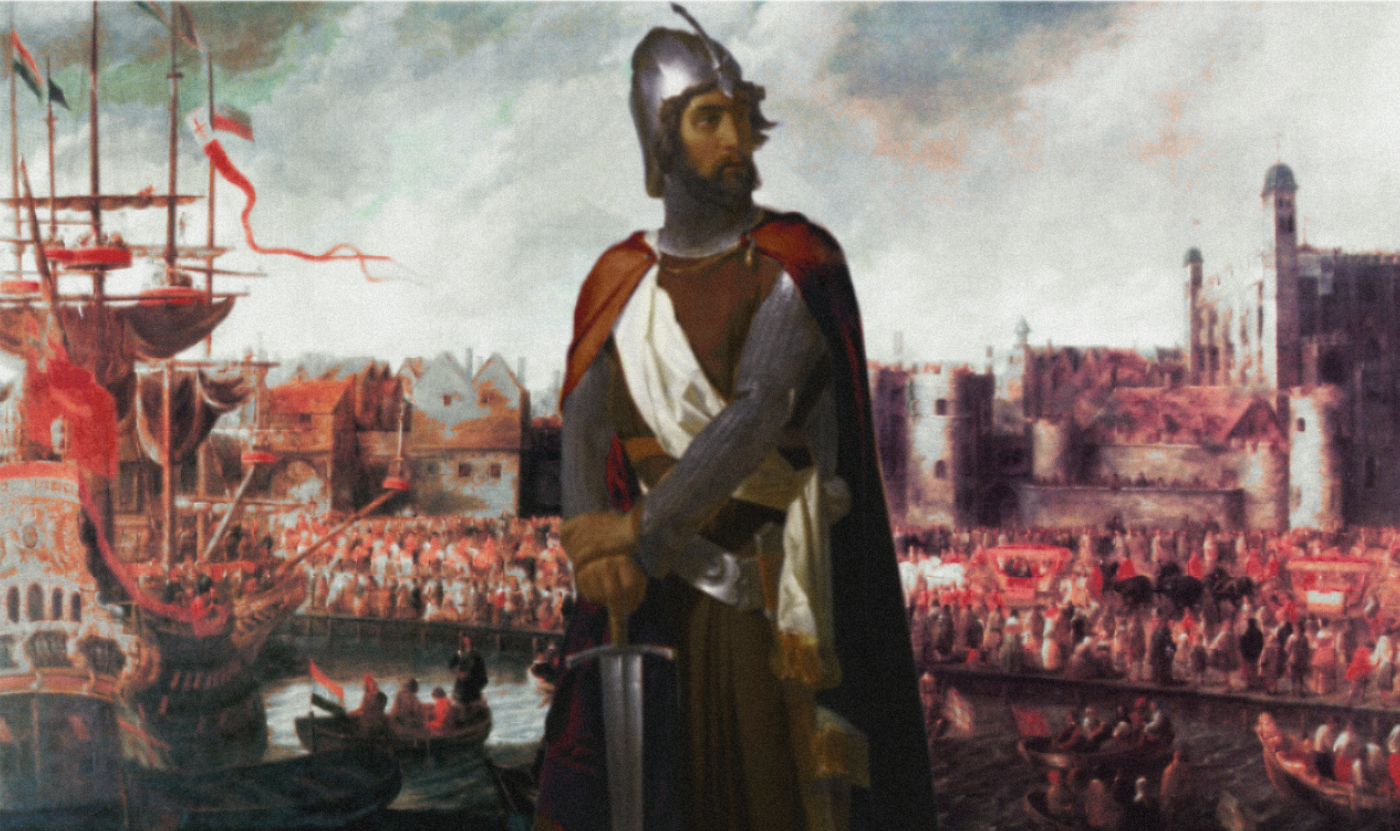
The noble — and particularly royal — bloodlines of Realmgard often create a complicated web and relation and dynastic claims. The complicated saga of the succession of the Gallicantien and Middelmerish thrones culminated in the invasion of Middelmere by the Gallicantien King Thibault II.
After a Marin dynasty from the Duchies of the Sea came to power as the ruling Kings of Middelmere, Thibault justified the traditional status of the Marin Dukes as vassals of the Kings of Gallicantu to claim overlordship of Middelmere and the Kingdoms of the Sea. At the head of the largest Gallicantien army assembled in centuries, Thibault sailed to the Kingdoms of the Sea after Hildebrand, the reigning King of Middelmere, refused to pledge fealty to Thibault.
Thibault’s landing is viewed as the opening action of the Century’s War, which would dominate affairs in both Middelmere and Gallicantu for the next 105 years. Notably, Thibault first landed in Morfilod, making the most of the longstanding resentment towards the Middelmerish conquest of Morfilod to stir up a rebellion of Morfilodish nobles to aid his campaigns in Middelmere.
The Middelmerish armies were able to retain control of several important cities, but the bulk of Middelmere soon fell under Gallicantien control and most of the Middelmerish attempts at pushing back the lines ended in failure. The fall of the Middelmerish capital was a major blow to Middelmerish morale and a major symbolic victory for the Gallicantiens — to project his legitimacy, Thibault had himself crowned King of Middelmere in the capital, though Hildebrand continued to rule as King in the unconquered Middelmerish territory and claim all of the Middelmere as his domain.
Until Gallicantien control of Middelmere was finally definitively broken at the end of the Century’s War, all later Gallicantien Kings would follow Thibault’s example and have themselves crowned as Kings of Middelmere in the capital.
After the initial Gallicantien advance, the war settled into a stalemate with little gains by either side, eventually leading to a treaty between Thibault and Hildebrand that recognised the territory of the two the rival Kings, but did little to resolve the actual status of the Crown of Middlemere, making future outbreak of fighting all but inevitable.
Thibault died in Middelmere, though as a result of a hunting accident rather than in battle. Given the circumstances of his death, the possibility that he was assassinated by Hildebrand’s faction has lead to centuries of speculation, though there is little definitive. Hildebrand did deny any direct involvement in Thibault’s death and did offer his consolations to the Gallicantien court, though his message is known to have been couched in sarcasm and mockery.
Although the Century’s War would ultimately end with a Middelmerish victory and the end of the Gallicantien occupation, by the end of Thibault’s life, Gallicantien control of the bulk of Middelmere was secure for the next several decades and the reverse of fortunes in the war would be a slow process lasting generations and spanning the course of several further phases of the war.
Discover the rest of the Encyclopedia Realmgardica here:
Follow me here:
If you’ve enjoyed my content, please consider supporting me through Ko-fi or Patreon, or through Paypal by scanning the QR code below:

Follow Realmgard and other publications of Emona Literary Services™ below:
Subscribe to the Emona Literary Services™ Substack newsletter here.

This work is licensed under a Creative Commons Attribution-NonCommercial-NoDerivatives 4.0 International License.
The author prohibits the use of content published on this website for the purposes of training Artificial Intelligence technologies, including but not limited to Large Language Models, without express written permission.
All stories published on this website are works of fiction. Characters are products of the author’s imagination and do not represent any individual, living or dead.
The realmgard.com Privacy Policy can be viewed here.
Realmgard is published by Emona Literary ServicesTM
