If I had to guess, I say that, at least outside of China and in the English-speaking world especially, the most famous and consequential martial arts in history is Bruce Lee.
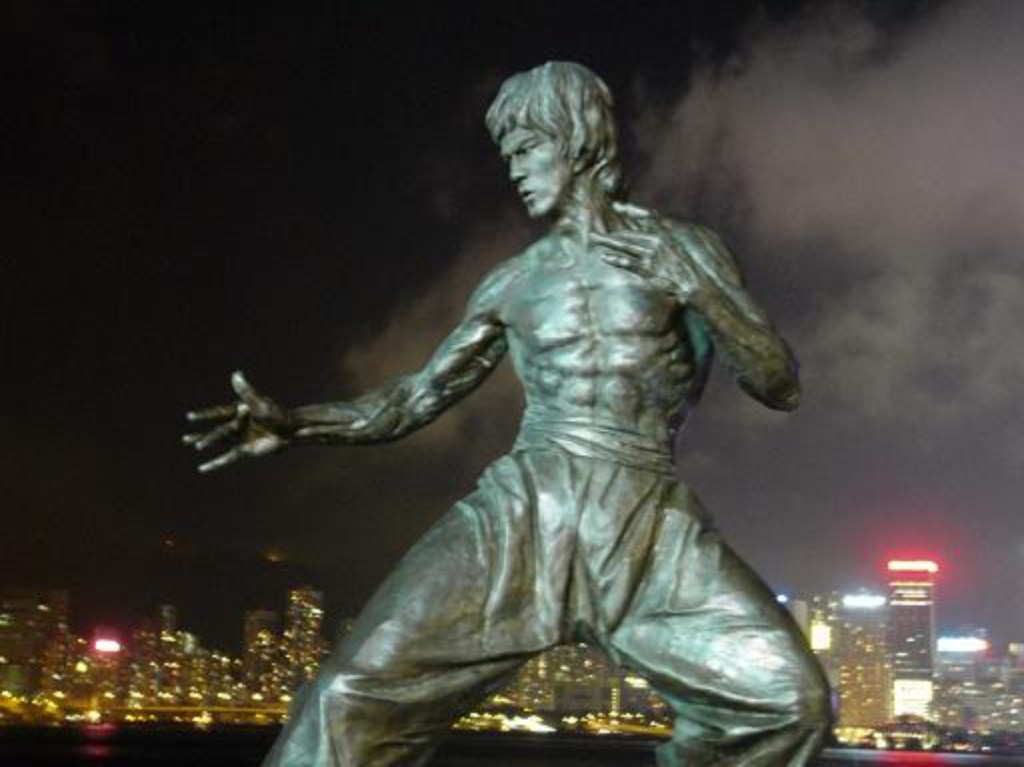
Image via Wikimedia Commons. Released into Public Domain by original author.
In addition to being one of — if not the — first Hong Kong actors to break into the mainstream of North American Pop Culture, he directed and/or starred in several of the best Martial Arts movies of all time, is associated with one of the most iconic film costumes ever (the yellow jumpsuit from Game of Death) created his own martial art, and, after his untimely death, several of the next generation of iconic martial artists were set up by the Hong Kong film studios as his direct successors.
I’m going somewhere with this, I swear.
Given that the average person doesn’t really keep up with the history and culture of countries other than their own, it’s not exactly surprising that the average North American doesn’t really know the history of Chinese martial arts, so several of the major iconic figures in the history of Chinese martial arts aren’t know outside of China.
For example, how many North Americans know that the origins of Kung Fu are traced back to the Buddhist monk Bodhidharma?
Quick sidebar: Kung Fu is not a martial art, it’s more like the Chinese word for “martial arts.” It’s a bit more complicated than that, but that definition is sufficient for the purposes of this post.
Again, I’m going somewhere with this, I swear.
One of the other icons of Chinese martial arts is Wong Fei-hung.
Now, despite his lofty reputation (more on that later), the Wikipedia article about him is pretty sparse, at least in English — largely, I suspect, because Wikipedia is trying to stick with the factually-verifiable and, as in often the case with folk heroes, that’s not exactly an easy feat.
In brief, Wong Fei-hung was famous as both a doctor and a martial arts master, to the point of being counted among the Ten Tigers of Canton, the greatest martial artists of Southern China.
So famous, in fact, that he’s been the subject of no less than 123 movies — including a record-setting 77 appearances played by Kwan Tak-hing. According to Wikipedia, that’s the most times an actor has played the same character. For reference, legendary Mexican wrestler El Santo appeared (basically as himself) in 53.
Once again, I’m going somewhere with this, and we’re right about to get there.
Among the many, many times Wong Fei-hung has been depicted on film is the Once Upon a Time in China series, starring Jei Li as Wong Fei-hung in his star-marking role.
Of particular note is the series’ theme song, derived from a traditional Chinese folk song dating back to the Ming Dynasty called On the General’s Orders, which was apparently associated with Wong Fei-hung long before the movie. In fact, earlier Wong Fei-hung movie Drunken Master (starring Jackie Chan) already used the song as a theme.
But the version associated with Once Upon a Time in China, performed in Cantonese by popular Hong Kong singer-songwriter-actor George Lam has become the most popular version of the song.
Incidentally, the Mandarin version of the song for Once Upon a Time in China was performed by Jackie Chan, who is a classically-trained Peking Opera performer.
Translation being what it is, I’ve seen the title as variously “To be a Hero”, “A Man Should Better Himself [also, ‘Be Self-Reliant’]”, and, my personal favourite, “Mr. Strong Man.” However, “A Man of Determination” seems to be the most common, and is probably the most comprehensible translation of the title.
Honestly, it’s probably the perfect song for a Martial Arts movie.
“The righteous spirit of a hero
Translation from allthelyrics.com
Is like the noonday sun
Burns brighter than the sun.”
I can’t speak to their accuracy, but they’re at least broadly
consistent with the other translations I’ve seen.
And you can listen to the George Lam version here:
The playlist is here:
And follow me here:
If you’ve enjoyed my content, please consider supporting me through Ko-fi or Patreon, or through Paypal by scanning the QR code below:

Follow Realmgard and other publications of Emona Literary Services™ below:
Subscribe to the Emona Literary Services™ Substack newsletter here.

This work is licensed under a Creative Commons Attribution-NonCommercial-NoDerivatives 4.0 International License.
The author prohibits the use of content published on this website for the purposes of training Artificial Intelligence technologies, including but not limited to Large Language Models, without express written permission.
All stories published on this website are works of fiction. Characters are products of the author’s imagination and do not represent any individual, living or dead.
The realmgard.com Privacy Policy can be viewed here.
Realmgard is published by Emona Literary ServicesTM
