Middlesbrooke is basically Fantasy-Vienna.
Kinda-sorta.
If you squint.
And, well, real Vienna was a major centre of culture, especially music. With that in mind, I was going to do my post about Rock Me Amadeus again, but it hasn’t been long enough since the last time.
Instead, I decided to post my next most Classical Music-related post, namely Liszt’s Totentanz. Liszt did play concerts in Vienna, but isn’t as closely associated with Vienna as other composers are.
Now, I wouldn’t say that I like Classical Music. But I did take a Music History class during my undergrad, so I got a couple semesters’ worth of exposure to Classical Music, so I can safely say that there are individual pieces of Classical Music that I actually really dig.
The Kyrie of Guillaume de Mauchaut?
Yup, love it.
Erlkönig?
Reminds me of the theme from the 90s X-Men cartoon. Which is also awesome…
Pomp and Circumstance?
Fantastic as for both graduation ceremonies and bombastic Pro Wrestlers.
The Swan of Tuonela?
Literally the entire reason I wrote my term paper about Sibelius.
And that brings us to Hungarian Romantic pianist, composer, music tutor and total babe Franz Liszt.
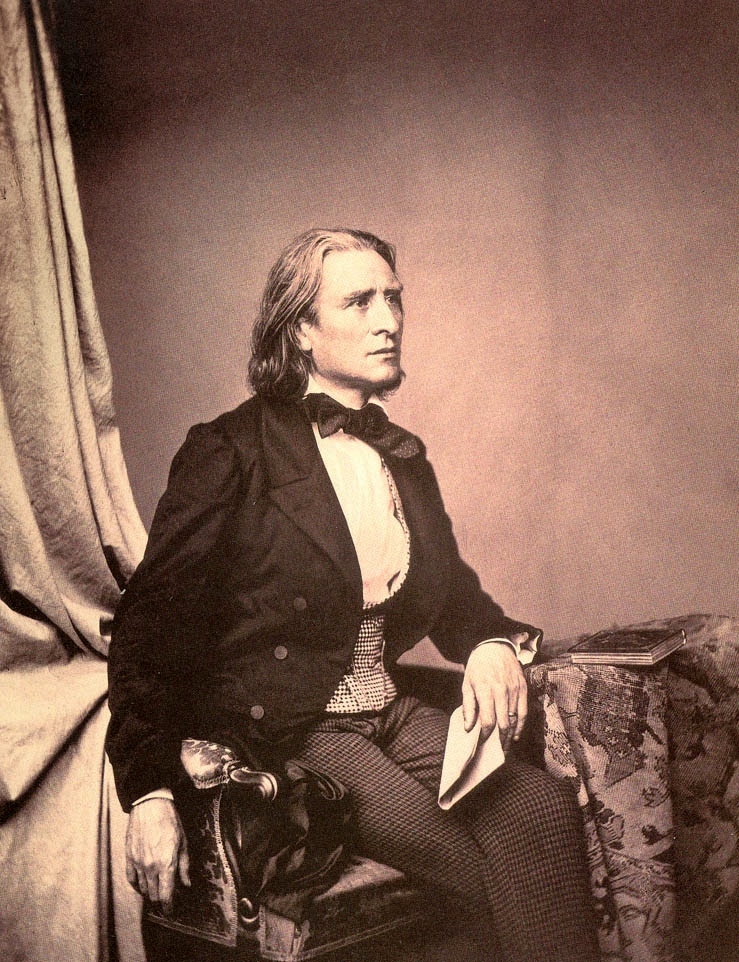
Image via Wikimedia Commons. Public Domain.
Specifically, his Totentanz.
If that recurring “dun-dun, dun-dun, dun-dun-dun-dun” sounds familiar, that’s because it’s the Dies Irae, a Medieval requiem hymn that has been quoted in everything (see above) from Star Wars (multiple times), Lord of the Rings to It’s a Wonderful Life and Citizen Kane.
Beyond that recurring motif, there’s a lot going in Totentanz.
For reference, the sheet music looks like this:
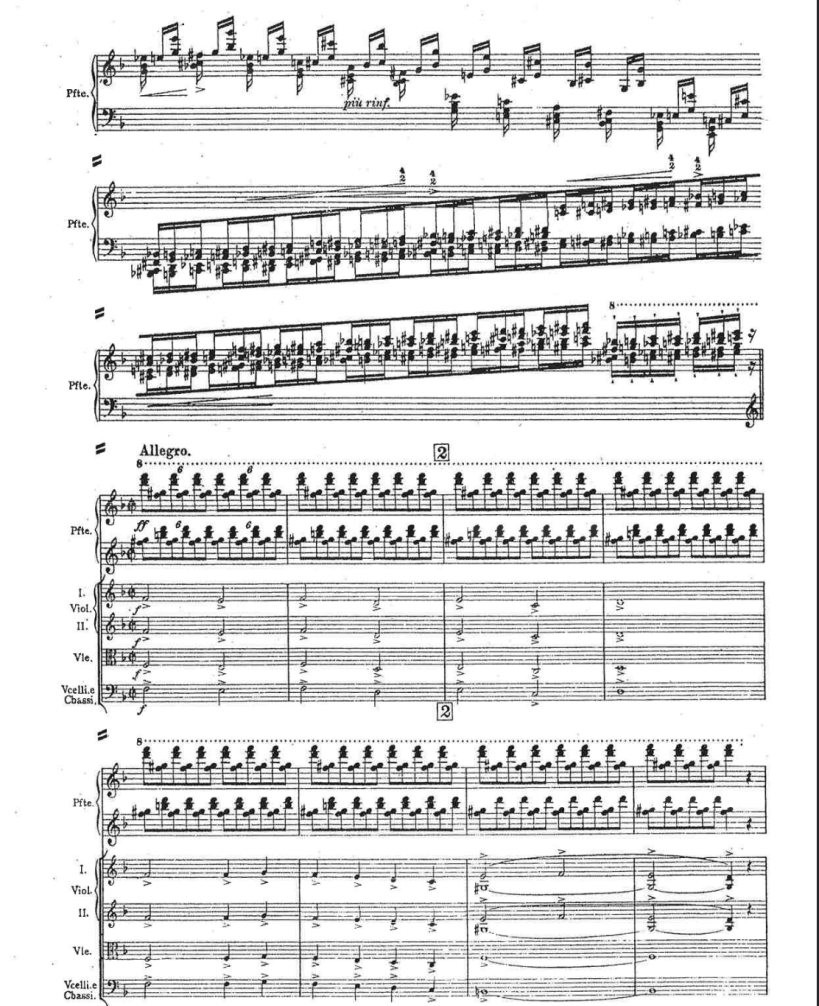
Now, that’s the version for piano and orchestra, which is apparently easier to play than the solo piano version, which is still apparently not the most difficult Liszt piece.
I never really got good at playing any musical instrument or even really grasped reading musical notion, so I may be way off base here, but Totentanz was composed, I believe, when Liszt pushed his piano down several flights of stairs, and it sounds like it needs to be played by a flea who just downed several shots of espresso.
And I mean that in the nicest way possible.
Honestly, I think part of my appreciation of Totentanz is the respect I will have for the ability of anyone who is not a flea who just down several shots of espresso frantically hopping around the keyboard.
It just seems surreal to me that this —
— can be played well given the limits of human anatomy/sanity.
Though, admittedly, it is pretty fitting that a piece inspiration by a hymn about all the souls who have ever lived despairing as God literally melts the universe should be distressing and chaotic to behold.
And, again, from where I’m standing, having the dexterity to play Totentanz well and the muscle/actual memory to play it without sheet music still seems like a superhuman achievement to me.
As evidenced by Ukrainian-American Youtube Classic Musician Valentina Lisitsa:
Incidentally, the aforementioned Totentanz for piano and orchestra is this:
The full playlist is here:
And, follow me here:
If you’ve enjoyed my content, please consider supporting me through Ko-fi or Patreon, or through Paypal by scanning the QR code below:

Follow Realmgard and other publications of Emona Literary Services™ below:
Subscribe to the Emona Literary Services™ Substack newsletter here.

This work is licensed under a Creative Commons Attribution-NonCommercial-NoDerivatives 4.0 International License.
The author prohibits the use of content published on this website for the purposes of training Artificial Intelligence technologies, including but not limited to Large Language Models, without express written permission.
All stories published on this website are works of fiction. Characters are products of the author’s imagination and do not represent any individual, living or dead.
The realmgard.com Privacy Policy can be viewed here.
Realmgard is published by Emona Literary ServicesTM

