Pherais,
Unwavering Maiden
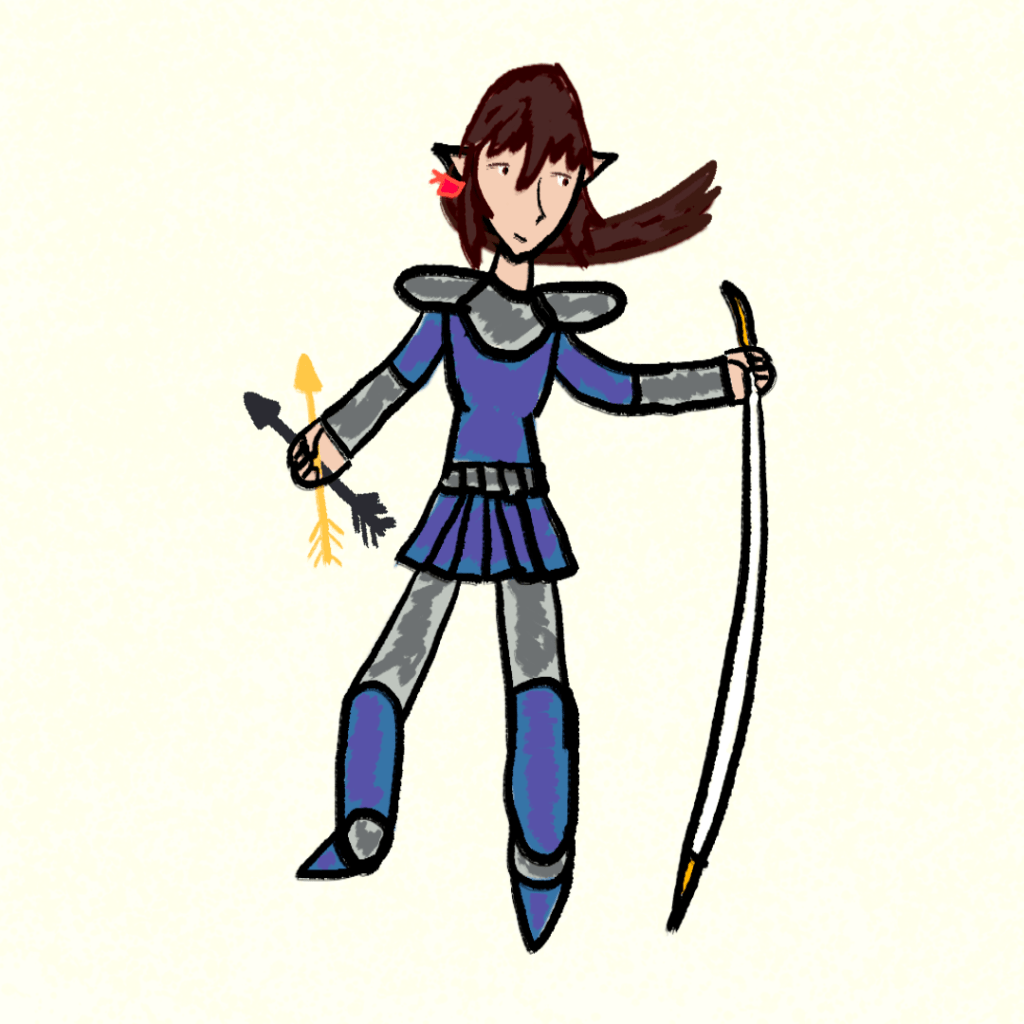
Goddess of bad luck, fortitude, and reversals of fortune, patron of adventurers
Daughter of Erha and Aivas, elder sister of Anassa, Pherais is, among her other domains, generally viewed as a goddess of justice — specifically in the sense of poetic justice and well-earned reversals of fortune.
Not a goddess of justice in the sense of law codes or legal proceedings, Pherais is rather viewed as the goddess who brings changes of fortune: bringing fortune and good luck to the downtrodden and persecuted and raining down misfortune as retribution for the misdeeds of the arrogant and wicked.
Pherais is viewed as a complimentary counterpart to her sister. Whereas her sister is associated with good luck, Pherais is generally associated with bad luck, though nevertheless seen as a benevolent goddess and friend to mortals. Pherais does not necessarily bring back luck, so much as offers solace and endurance to those suffering from it. Bad luck is not seen as a sign of the disfavour of Pherais. Indeed, Pherais is often venerated as the goddess who ends bad luck.
Thus, she is often depicted as intervening to change the turning of Anassa’s wheel. Similarly, she is depicted as wielding a bow to loose either golden arrows of fortune or iron arrows of misfortune upon mortals as their deeds have merited.
Because of their youth, Pherais and Anassa are among the most recognisable deities to be noted as having no romantic partners.
Despite being the daughter of Erha and Aivas, the myths actually associate Pherais more closely with Aeto and Iona.
The younger goddess is said to have learned justice and law sitting at the feet of her aunt Iona and is often depicted accompanying her uncle Aeto on his travels throughout the mortal world, aiding mortals in their time of need. Pherais is specifically depicted and venerated as a righteous huntress of demons and monsters.
For this reason, Pherais has been widely adopted as the patron deity of adventurers.
Pherais is said to have a strained relationship with her father, resenting Aivas’ innumerable love affairs before his marriage to Erha. Many natural wonders in Realmgard are said to have been created by Aivas, intended as gifts for his daughter. While these are recorded as being largely unsuccessful, Pherais is nevertheless said to aid her father without hesitation in his battles with the great sea monsters.
Although Pherais rarely associates with the many river and lake goddess who are her half-sisters, she will unflinchingly carry out her duties as a just and impartial punisher of the wicked and protector of the innocent to come to their defense when they are threatened by demons or monsters or offended by the actions of arrogant mortals.
There are a few myths revolving around rare moments of good humour on Pherais’ part, which culminate with her joining in on her half-sisters’ free-spirited gatherings. Anassa will also invariably join in. The river and lake goddesses are infamous for their attempts to pair up Pherais with one of the handsome male deities.
This is, in turn, a large part of the almost militantly-aromantic Pherais ongoing refusal to associate with her many sisters…
Of all my god names so far, “Pherais” is probably the most obviously Greek-looking — Pherae is, in fact, a real Greek city an Pherai is a fairly obscure city (possibly founded by people originally from Pherae and named for the city) in what is now Iran attested to only by a single Greek historian.
Incidentally, it’s pronounced like “Fair Rays”, or like a kinda weird way of saying “Fairies”…
Despite looking Greek — largely as the result of me thinking the Ph looked better than an F — the name is ultimately meant to invoke the Latin words for iron and endurance to represent her strength and fortitude.
Now, if Dunstana is the avatar of Anassa, Kat isn’t necessarily Pherais, which is why she doesn’t look exactly like Kat the way Anassa looks exactly like Dunstana.
If there’s a figure Pherais from real-life mythologies is most like, it’s probably Nemesis, the Greek goddess (and concept) of dramatic, but ultimately well-deserved reversals of fortune — specifically the punishment of hubris, which has a more specific connotation of being outrageous to the gods and thus meriting retribution that the modern English doesn’t really convey.
As a pretty clear demonstration of what exactly Nemesis is the goddess of, it’s said that the Persians brought a block of marble with them when they invaded Greece to build a victory monument out of. After routing the Persians at Marathon, the Athens then promptly used that block of marble to make a statue of Nemesis.
There’s a little bit of Artemis there, too, with the aromantic archer goddess angle, but that’s not entirely deliberate. I tried not to play up that connection but avoiding any real crossover in what they’re actually goddesses of.
Also, catch up on The Bandits of Goldharbour here:
And follow me here:

This work is licensed under a Creative Commons Attribution-NonCommercial-NoDerivatives 4.0 International License.
The author prohibits the use of content published on this website for the purposes of training Artificial Intelligence technologies, including but not limited to Large Language Models, without express written permission.
All stories published on this website are works of fiction. Characters are products of the author’s imagination and do not represent any individual, living or dead.
The realmgard.com Privacy Policy can be viewed here.
Realmgard is published by Emona Literary ServicesTM
