Elves
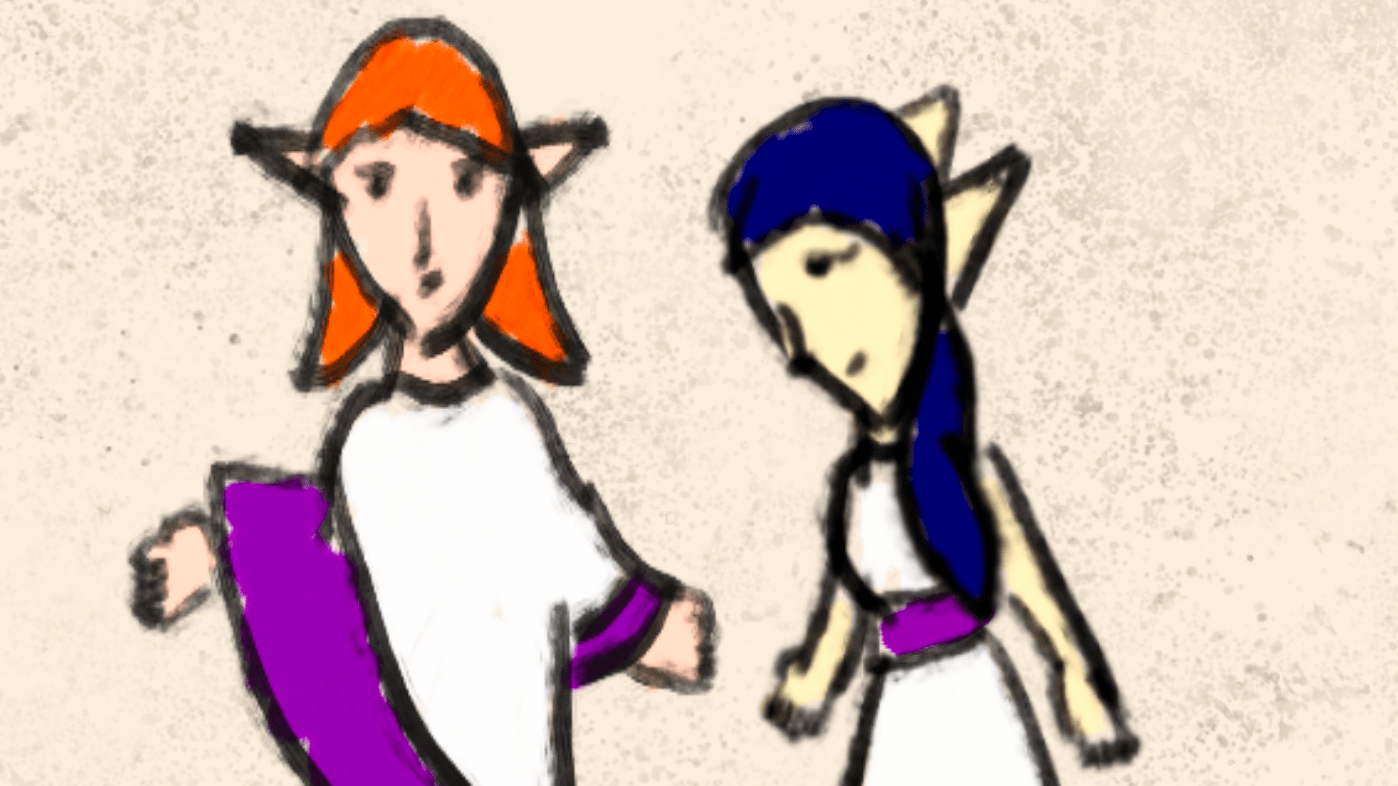
Once the dominant cultural group in Realmgard during the period of the Elven Empire, Elven culture and language have remained hugely influential in the continent’s history. The Elven language is particularly important to scholarly pursuits in Realmgard, and has influenced the development of the Natalian, Pelayan, and Gallicantien languages. In everyday use, however, the Elven language has been largely supplanted by the Gardian lanuage.
While the ancestors of the founders of the Elven Empire famously arrived in Realmgard as refugees from a war in Archipelago — an event that scholars agree is at least broadly historical — there is also evidence of Elven settlements in Realmgard pre-dating the arrival of the Archipelagian refugees, especially in the southern regions of Realmgard.
Because of southern Realmgard’s proximity to the Wandering Coast and control of the region frequently changing hands between the Elven Empire and its successors and the Melkartite Kingdom of Arena and its successors, there are centuries-old Elven populations throughout the Wandering Coast which have their own unique cultural identity.
The most notable physical features of Elves are their pointed ears and strikingly bright hair and eye colours that do not occur among the other peoples in Realmgard. On average, Elves tend to be the tallest of the peoples of Realmgard Especially during the period of the Elven Empire, Elves were upheld as the ideal of beauty standards.
While the Elves as a whole are poetically described as immortal, this is a metaphorical description of the fact that Elven culture has existed and endured for millennia. Actual Elves are not known to have lifespans which are significantly longer than any other of the peoples of Realmgard.
Basically, Realmgard Elves are Romans whose language and culture continued to remain distinct down to the early-mid 17th century, which is implausible for any number of historical, linguistical, and anthropological reasons, but helps me with writing Elves that are both distinct from everyone else in Realmgard and from the typical Fantasy “Tolkien Elves, but without any of the things that actually make Tolkien Elves interesting” style Elves.
The thought making Elves Roman was an interesting way to play around with the fact that Elves’ defining trait is almost invariably to be “Better than You“, given that the actual Romans definitely thought they were better than you.
And, you know, it was a way to put the two Classics degrees to good use…
If you’ve enjoyed my content, please consider supporting me through Ko-fi or Patreon, or through Paypal by scanning the QR code below:

Follow Realmgard and other publications of Emona Literary Services™ below:
Subscribe to the Emona Literary Services™ Substack newsletter here.

This work is licensed under a Creative Commons Attribution-NonCommercial-NoDerivatives 4.0 International License.
The author prohibits the use of content published on this website for the purposes of training Artificial Intelligence technologies, including but not limited to Large Language Models, without express written permission.
All stories published on this website are works of fiction. Characters are products of the author’s imagination and do not represent any individual, living or dead.
The realmgard.com Privacy Policy can be viewed here.
Realmgard is published by Emona Literary ServicesTM
