Yamatai
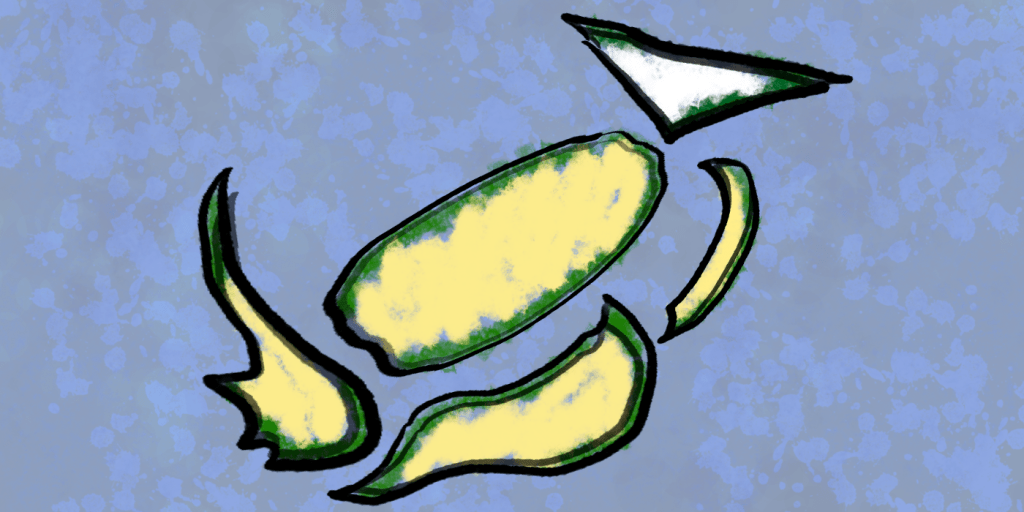
In Realmgardian geography, the conceptual line drawn to divide Terrace into eastern and western halves most often runs through Middelmere. Relative to this, the island nation of Yamatai is reckoned as the easternmost known landmass on Terrace.
Yamatai is first mentioned in Realmgardian sources several centuries ago by the traveller Luca Pertico, whose voyages took him across the eastern continents of Laodike and Solar. Although Pertico did not visit Yamatai himself, his second-hand accounts of the country were nevertheless the most information available in Realmgard for the next several centuries.
With the expansion of marine intercontinental trade routes and empires, particularly by Pelayo and Torres, Realmgardian sailors first came into direct contact with Yamatai about 200 years before the present. Since then, several trade posts have been established by Pelayan, Torrean, and Middelmerish merchants. Despite the tensions and competing imperial ambitions of these Realmgardian nations, while operating within Yamatai itself, they are largely able to coexist peacefully for fear of provoking a response from Yamatai authorities and losing access to the lucrative markets within Yamatai.
Foreign access to Yamatai is tightly controlled. Foreign ships are only allowed to dock at certain ports and foreigners are only allowed to travel inside Yamatai with local sponsors. Despite this, there is an enduring fascination with foreign cultures and technologies throughout much of Yamatai society.
Yamatai itself consists of an island chain off the eastern coast of the continent of Solar, along with numerous minor islands — many of which are not inhabited — Yamatai consist of five primary islands. The bulk of the Yamatai population, including the Imperial court of Yamatai, is located on the central island of Chushin. The other four major islands of Yamatai are named after four divine figures in the mythology of eastern Solar said to be the guardians of the four directions.
Each of the four islands is named after the god associated with the direction of the island relative to Chushin: Seiryu (the Azure Dragon) to the east, Suzaku (the Vermillion Bird) to the south, Byakko (the White Tiger) to the west, and Genbu (the Black Turtle; though the actual nature of the god is debated) to the north.
For the most part, the islands of Yamatai are mountainous, with most major settlements located in the relatively rare and small plains scattered throughout the island chain. Notably, Yamatai is prone to earthquakes and has several active volcanoes and numerous hot spring areas. Notably, Yamatai architecture has developed several novel methods of being able to withstand earthquakes and tsunamis.
Again, Yamatai is Japan and this is probably the most I’ve done to actually think out the specific details — with the caveat that this is canon until I decide it isn’t.
I’ve established that Luca Pertico is Realmgard’s Marco Polo — to the point that “Pertico” is basically a pun that boils down to “Pole-O”. In real life, Marco Polo was the first European to mention Japan, having been present at the court of Kublai Khan at roughly the same time as Kublai’s invasions of Japan.
For the most part, being a country made up of predominantly mountainous islands is consistent with real-life Japan, as is the basic outline of the opening of trade with foreign merchants, with the exception that Yamatai is less restrictive to foreigners than the real Japan was. I’ve said before that my world is basically equivalent to the 1620s — in real life that’s immediately before Japan enacted the Sakoku policy, which didn’t actually completely block foreign contact (Dutch and English merchants were allowed to operate at the port of Dejima), but did highly isolate Japan from the rest of the world. Notably, not only were (most) foreigners forbidden from entry, native Japanese were forbidden from leaving.
This is, for reasons that aren’t unrelated, also the period that saw the intense persecution of Christianity in Japan really kick off.
“Yamatai” is the name of an ancient kingdom in Japan, though where exactly remains unclear. “Chushin” is Japanese for “centre”, “middle”, or “core” and the four other major islands of Yamatai are named for the Japanese names of the Four Gods/Symbols of East Asian mythology — you may recall that we’ve already been over Byakko when I wrote about The Girl in Byakkoya.
If you’ve enjoyed my content, please consider supporting me through Ko-fi or Patreon, or through Paypal by scanning the QR code below:

Follow Realmgard and other publications of Emona Literary Services™ below:
Subscribe to the Emona Literary Services™ Substack newsletter here.

This work is licensed under a Creative Commons Attribution-NonCommercial-NoDerivatives 4.0 International License.
The author prohibits the use of content published on this website for the purposes of training Artificial Intelligence technologies, including but not limited to Large Language Models, without express written permission.
All stories published on this website are works of fiction. Characters are products of the author’s imagination and do not represent any individual, living or dead.
The realmgard.com Privacy Policy can be viewed here.
Realmgard is published by Emona Literary ServicesTM
