Middelmere, Gallicantu,
and the Century’s War
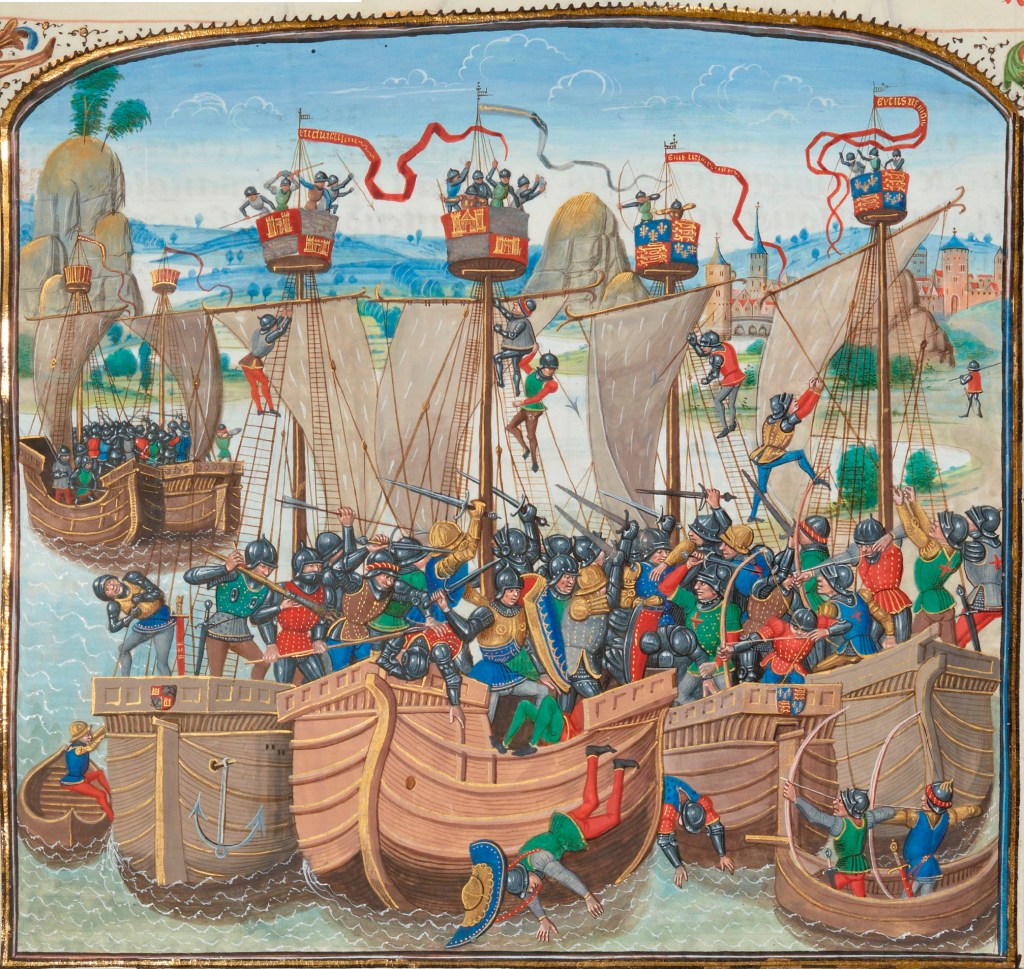
Though most of the coastal regions of Realmgard were targeted by raids undertaken by Hrimfaxi vikings during the high point of the viking period, due in part to its proximity to the island Hrimfax, Middelmere was a frequent target of Hrimfaxi raids.
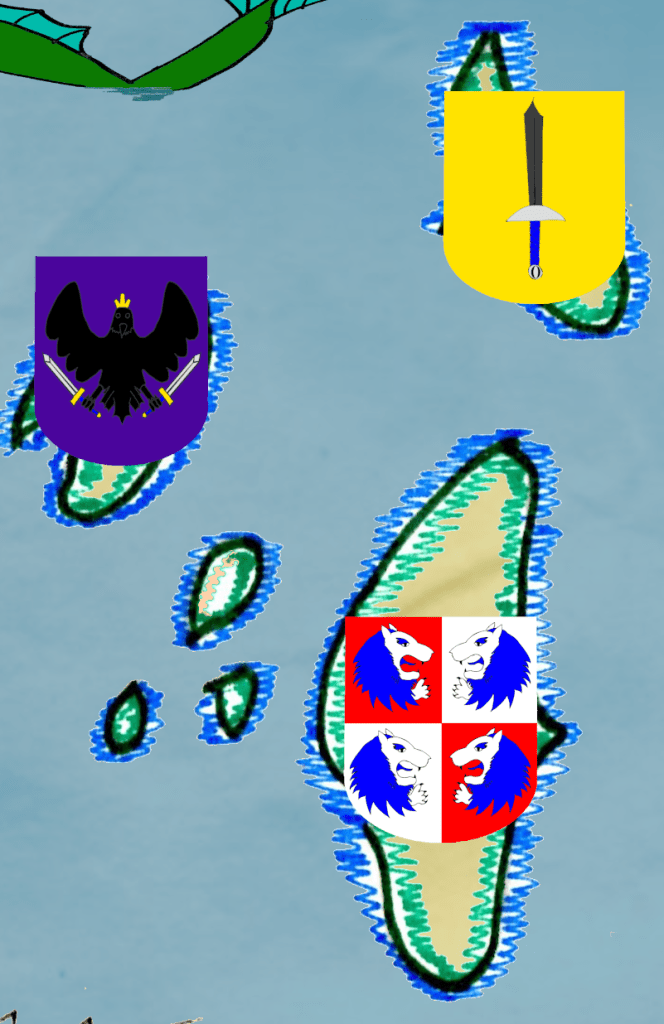
This culminated in a large-scale viking invasion of the island, with the goals of conquest and settlement. For the most part, this was successful, leading to extensive Hrimfaxi settlement in Middelmere (and from, there, the rest of the Kingdoms of the Sea) and even briefly the installation of Hrimfaxi leaders as Kings of Middelmere.
This Hrimfaxi connection in turn led to an ongoing connection with the Hrimfaxi descendants among the Marin lords of the Gallicantien Duchies of the Sea. Even after the crown was reclaimed by the previous Middelmerish dynasty, many kings of Middelmere took Marin women as their queens.
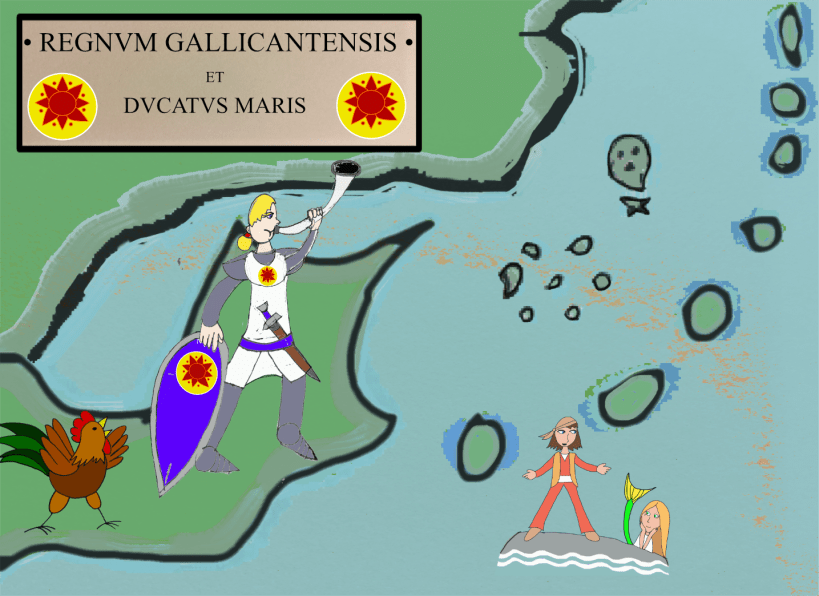
This in turn would lead to Marin and Gallicantien intervention in Middelmerish dynasty politics, precipitated largely by the childless Middelmerish King Hereward naming his Marin cousin Renaud his heir. Henceforth, the Middelmerish court would take on a more Marin character, though Renaud and his heirs would largely maintain the Middelmerish language and customs throughout the kingdom. Starting with Renaud’s grandson Hildebrand, the dynasty would take on Middelmerish names.
However, due to a claim stemming from Renaud’s dynasty being descended from the Kings of Gallicantu, King Thibault of Gallicantu would press his claim on Middelmere, as well as overlordship of the rest of the Kingdoms of the Sea, setting into motion what has come to be known as the Century’s War — though lasting a century (technically, 105 years, 9 months, and 3 days), the conflict was in fact a period of intermittent warfare between the two kingdoms fought in various phases interrupted by temporary truces and treaties.
Ultimately, much of Middelmere would be conquered by Gallicantu and the Kings of Gallicantu would proclaim themselves Kings of Middelmere and hold coronations for themselves as Kings of Middelmere in the Middelmerish capital.

Given longstanding animosity with Middelmere, the Gallicantu war effort would be enthusiastically supported by the nobles of Morfilod. Though still formally vassals of the newly-established dual monarchy of Gallicantu and Middelmere, the kings of Gallicantu prudently allowed Morfilod a high degree of autonomy while ruling over Middelmere.
Following a rapid early successes in the early stages of the war, the next century would see the gradual but steady reconquest of Middelmere, spurred on by the seemingly-miraculous appearance of a young peasant girl named Hildegard of Biegelsburg, who provided the Middelmerish faction with their greatest symbolic victory of the war by supposedly receiving a divine vision that revealed the location of the legendary sword Erchyll, once wielded by the ancient hero-king Caelin.
While the victorious King Hereward IV certainly did wield a sword claimed to be Erchyll in the late stages of the war, the actual identification of the sword remains a longstanding source of scholarly debate — as does much concerning Hildegard of Biegelsburg, who disappears from the historical record as mysteriously and suddenly as she appeared.
As always, follow me here:
If you’ve enjoyed my content, please consider supporting me through Ko-fi or Patreon, or through Paypal by scanning the QR code below:

Follow Realmgard and other publications of Emona Literary Services™ below:
Subscribe to the Emona Literary Services™ Substack newsletter here.

This work is licensed under a Creative Commons Attribution-NonCommercial-NoDerivatives 4.0 International License.
The author prohibits the use of content published on this website for the purposes of training Artificial Intelligence technologies, including but not limited to Large Language Models, without express written permission.
All stories published on this website are works of fiction. Characters are products of the author’s imagination and do not represent any individual, living or dead.
The realmgard.com Privacy Policy can be viewed here.
Realmgard is published by Emona Literary ServicesTM
