Yamatai
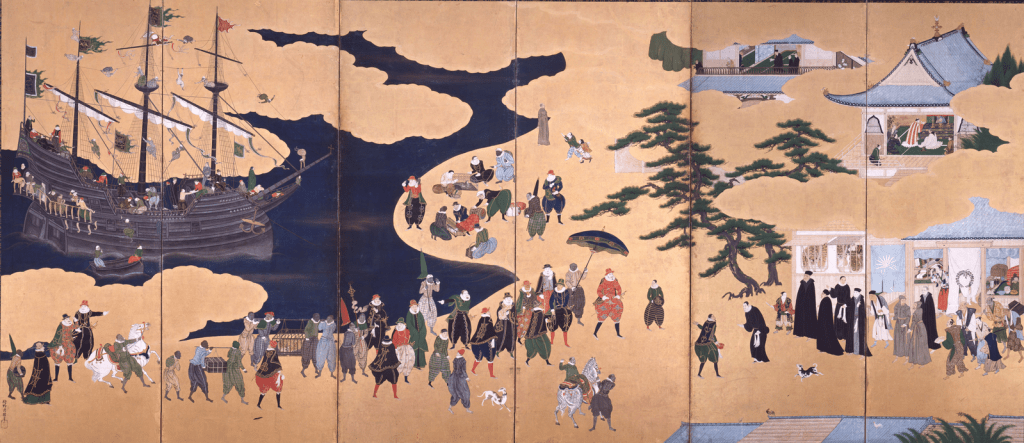
Arrival of the Southern Barbarians Screen: Kanō Naizen. Image via Wikimedia Commons. Public Domain.
In Realmgardian geography, the conceptual line drawn to divide Terrace into eastern and western halves most often runs through Middelmere. Relative to this, the island nation of Yamatai is reckoned as the easternmost known landmass on Terrace.
First brought to the attention of Realmgard’s inhabitants (though not visited in person) in the travelogue of Natalian explorer and merchant Luca Pertico, the island nation of Yamatai remains both poorly-understood and highly-romanticised in the Realmgardian imagination.
Pertico’s account of Yamatai is minimal, mentioning only the failed invasion of Yamatai by the forces of Khatu Khan, who ruled over much of the eastern continent and little of substance about Yamatai itself.
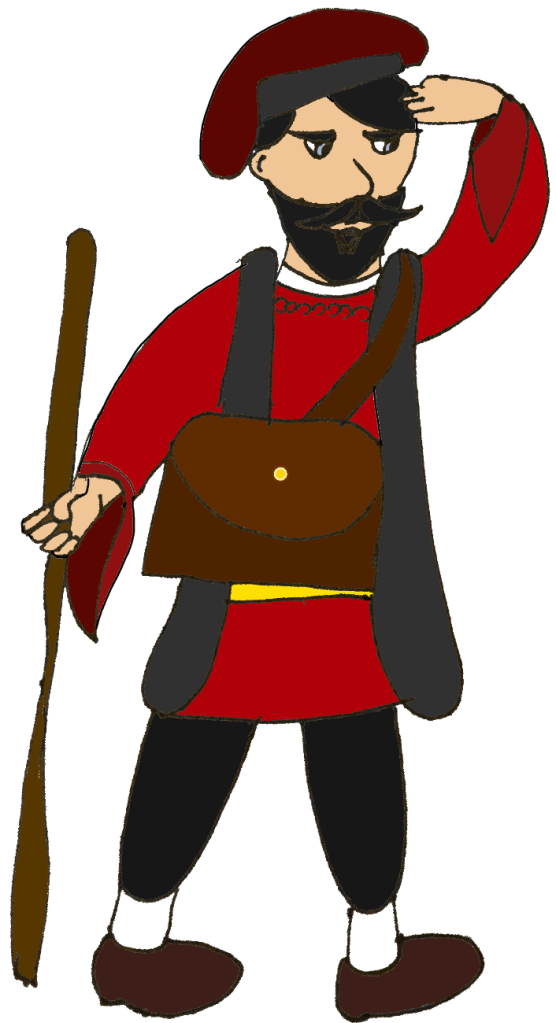
For the next several centuries, Yamatai would continue to be given fleeting mentions in Realmgardian histories and travelogues, including several unsubstantiated, largely mythologised accounts of Realmgardian sailors landing in Yamatai.
Notably, claiming to be a visiting dignitary from the Yamatai Imperial Court became, and still remains, a popular confidence scheme.
The establishment of intercontinental trade routes, particularly those of the Kingdom of Torres, the first Realmgardian nation to make contact Yamatai, has allowed for a slow but steady influx of knowledge about Yamatai’s history and culture to Realmgard — as well as the reverse, leading to a growing adoption of Realmgardian artistic and technological innovation in Yamatai.
The opening of Yamatai to Realmgardian travellers occurred about 200 years before the present. Since then, several trade posts have been established by Pelayan, Torrean, and Middelmerish merchants. Despite the tensions and competing imperial ambitions of these Realmgardian nations, while operating within Yamatai itself, they are largely able to coexist peacefully for fear of provoking a response from Yamatai authorities and losing access to the lucrative markets within Yamatai.
Foreign access to Yamatai is tightly controlled. Foreign ships are only allowed to dock at certain ports and foreigners are only allowed to travel inside Yamatai with local sponsors. Despite this, there is an enduring fascination with foreign cultures and technologies throughout much of Yamatai society.
Yamatai itself consists of an island chain off the eastern coast of the continent of Solar, along with numerous minor islands — many of which are not inhabited — Yamatai consist of five primary islands. The bulk of the Yamatai population, including the Imperial court of Yamatai, is located on the central island of Chushin. The other four major islands of Yamatai are named after four divine figures in the mythology of eastern Solar said to be the guardians of the four directions.
Each of the four islands is named after the god associated with the direction of the island relative to Chushin: Seiryu (the Azure Dragon) to the east, Suzaku (the Vermillion Bird) to the south, Byakko (the White Tiger) to the west, and Genbu (the Black Turtle; though the actual nature of the god is debated) to the north.
For the most part, the islands of Yamatai are mountainous, with most major settlements located in the relatively rare and small plains scattered throughout the island chain. Notably, Yamatai is prone to earthquakes and has several active volcanoes and numerous hot spring areas. Notably, Yamatai architecture has developed several novel methods of being able to withstand earthquakes and tsunamis.
access to the country by foreigners remains tightly-controlled, though not forbidden outright. Few Realmgardian visitors ever set foot beyond the ports of Yamatai cities, so rumour and exaggeration remain widespread in Realmgardian discussions about Yamatai.
However, certain foreigners who have been able to win the trust and patronage of local rulers in Yamatai have been granted permission to travel through the heartland of Yamatai and more accurate eyewitness accounts of life in Yamatai are beginning to be published in Realmgard.
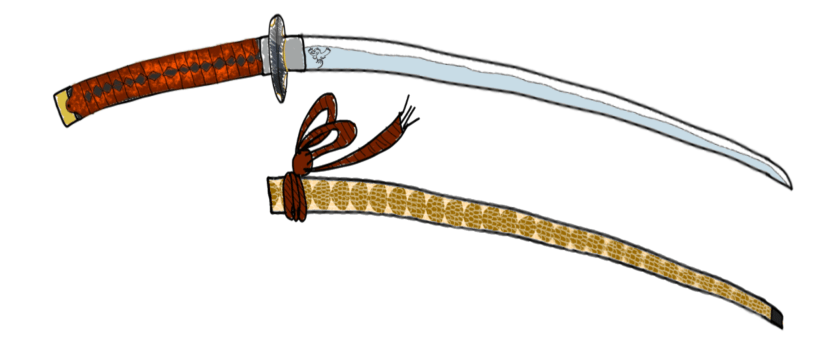
Yamatai art and artifacts — particularly weapons and armour, particularly the swords of Yamatai samurai — have proven popular among Realmgardian, setting off a frenzy for Yamatai-style art and the adoption of Yamatai techniques by Realmgardian artists.
Among the most famous Yamatai artifacts in Realmgard is the Houou Mochizuki, a sword forged by the famous female smith Mochizuki Hikari. How exactly the sword first arrived in Realmgard is unclear, but it is currently in possession of the Princes of Porthaven.
The largest community of Yamatai expatriates exists in the Kingdom of Torres — as stated, the first Realmgardian nation to establish ties with Yamatai — and Torres has been at the forefront of the movement to incorporate Yamatai artistic techniques. Similarly, the Torrean style remains the most widely-adopted foreign influence in Yamatai.
Torrean cooking has proven especially popular among the people of Yamatai.
Though direct contact with Yamatai and the Kingdom of Aurora is minimal, the Aurorean folktales centring on the adventurous orphan Anya of Greenspire have also proven immensely popular in Yamatai with a rapidity that has left many casual Realmgardian observers thoroughly bemused.
There is also a not insignificant population of Yamatai immigrants and expatriates in Porthaven’s Outlands Quarter.
The establishment of Yamatai communities in Realmgard continues to facilitate cultural exchange. Realmgardian scholars have begun commissioning histories of Yamatai written by Yamatai individuals and numerous collaborations have been undertaken between Yamatai and Realmgardian artists.
As always, follow me here:
If you’ve enjoyed my content, please consider supporting me through Ko-fi or Patreon, or through Paypal by scanning the QR code below:

Follow Realmgard and other publications of Emona Literary Services™ below:
Subscribe to the Emona Literary Services™ Substack newsletter here.

This work is licensed under a Creative Commons Attribution-NonCommercial-NoDerivatives 4.0 International License.
The author prohibits the use of content published on this website for the purposes of training Artificial Intelligence technologies, including but not limited to Large Language Models, without express written permission.
All stories published on this website are works of fiction. Characters are products of the author’s imagination and do not represent any individual, living or dead.
The realmgard.com Privacy Policy can be viewed here.
Realmgard is published by Emona Literary ServicesTM
