King Alfstan of Middelmere
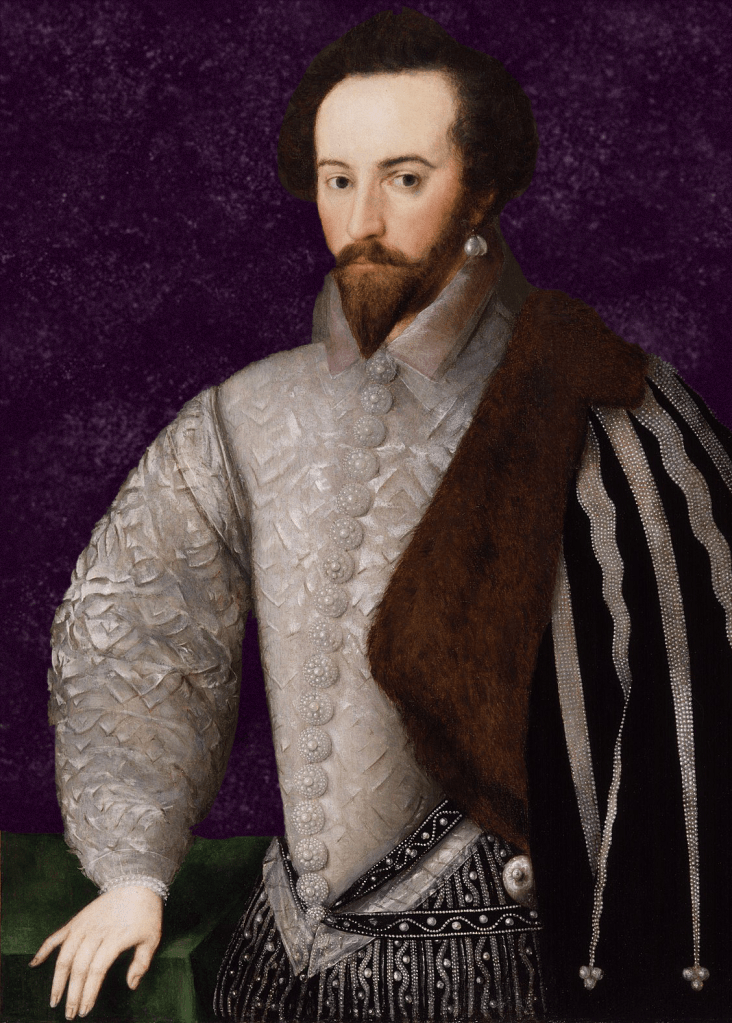
via Wikimedia Commons. Public Domain.
While Alfstan’s reign has seen the most positive diplomatic relations with Gallicantu in a century and a half, it was also been marked by tension throughout the Kingdoms of the Sea. Inheriting the throne of Middelmere as the closest relation to his childless predecessor, Alfstan also has a clear throne to the throne of Makeland as a descendant of that Kingdom’s ruling dynasty, leading to whispers at both courts that he will press his claim on Makeland. Similarly, the Kings of Middelmere have also made longstanding claims to be the rightful overlords of Carog. Conversely, Morfilod has been considered a part of the Middelmerish Kingdom for centuries, ever since its initial conquest by Middelmere and incorporation into the Kingdom.
Alfstan’s owns thoughts and ambitions towards Carog and Makeland are as yet unclear and he has made no outward signs towards preparing for expeditions to Carog and Makeland. However, this would make Alfstand the first ruler of the unified Kingdom of the Seas since the legendary King Cailan. Due to his close ties to King Aldéric of Gallicantu, there are rumours that Gallicantu will commit to aiding Alfstan’s expeditions to Makeland and Carog.
In light of having spent most of his early life in Makeland among his relatives there, he was named Alfstan by his parents as a measure to convey his legitimacy as a potential heir to the throne of Middelmere. In the Middelmerish language, Alfstan means “Elf-Stone” and the Alfstan is the most treasure relic among the Middelmerish crown jewels, its name coming from the belief that the gem itself was originally brought to Middelmere during the period of Elven settlement on the island during the Imperial Era. How exactly it came into the hands of the Middelmerish Kings is unclear, but its use in the coronations of Middelmerish Kings is attested back to the days of the very earliest Kings of Middelmere.
While popular with his Middelmerish subjects, the tensions with Makelandic created by his ascent to the throne have led to several previous assassination attempts on King Alfstan by Makelandic patriots. Thus far, King Alfstan has survived these attempts with only minor injuries, thanks in part to a run of notable good luck in narrowly avoiding his would-be assassins, but primarily as a result of their own ineptitude.
To avoid providing Alfstan with a pretext for invasion, the Makelandic court has disavowed the actions of these conspirators and assured the Middelmerish court that the conspirators have been acting entirely of their own accord without even the knowledge of the Makelandic court.
Whereas Alfstan himself came to the throne by succeeding the childless previous monarch, he is unlikely to have that problem when it comes to the royal succession after him. Alfstan and his wife, Ragnhild of Hrimfax, have eight children.
An amateur scholar, Alfstan was written a number books and dabbled in writing plays, along with several books of Magicology, two political treatises, a biography of the famous wizard Brorvonius, and a well-regarded book of jam recipes.
My basic concept for Middelmere is Anglo-Saxon England that was never conquered by the Normans and more generally the Kingdoms of the Sea are England, Scotland, Wales, and Ireland that were never unified under a British monarchy.
It’s hard to gauge what Anglo-Saxon culture would look like if it had survived for another 500 years or so, so I think I’m sort of copping out by going with “1600s England, but everyone still has an Old English name”…
With that in mind, King Alfstan is represented by a portrait of Sir Walter Raleigh. At the time the King of England (and also Scotland) was James, but I liked this portrait of Raleigh more than any of the pictures of James I could find. Incidentally, that’s why Alfstan is a member of the Makelandic (i.e. Realmgard-Scottish) royal dynasty.
King James was famously almost exploded by radical Catholic conspirators (the most well-known being Guy Fawkes). Since real England circa the 1620s has a lot more of a religious component than Realmgard does, I’ve decided to have the assassination attempts against Alfstan be motivated purely by politics.
Also, King James did write several books about magic — and a screed against smoking. I don’t think he ever wrote a book of jam recipes though. That one’s actually a reference to Nostradamus…
Funnily enough, after deciding that Alfstan’s wife would be from Hrimfax (Realmgard-Scandinavia), I checked King James’s wife and found out it was Anne of Denmark — I may have known that, but I wasn’t consciously thinking about it when I had the choice.
As stated, Alfstan means “Elf-Stone”, which is also the name Aragorn took as King — his regnal name Elessar coming from a literal Elf-Stone also called the Elessar. It’s not a reference, but also not-not a reference…
Follow me here:
If you’ve enjoyed my content, please consider supporting me through Ko-fi or Patreon, or through Paypal by scanning the QR code below:

Follow Realmgard and other publications of Emona Literary Services™ below:
Subscribe to the Emona Literary Services™ Substack newsletter here.

This work is licensed under a Creative Commons Attribution-NonCommercial-NoDerivatives 4.0 International License.
The author prohibits the use of content published on this website for the purposes of training Artificial Intelligence technologies, including but not limited to Large Language Models, without express written permission.
All stories published on this website are works of fiction. Characters are products of the author’s imagination and do not represent any individual, living or dead.
The realmgard.com Privacy Policy can be viewed here.
Realmgard is published by Emona Literary ServicesTM
