Cassandros
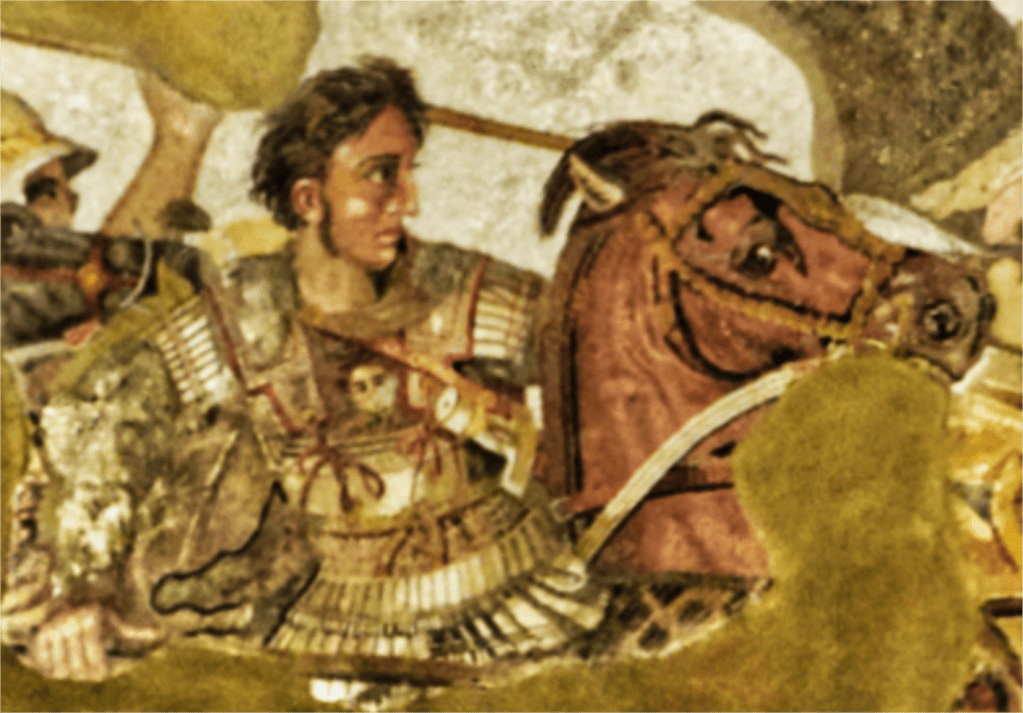
Historically regarded by man as the most successful conqueror and military leader in the history of Terrace, Cassandros first rose to prominence unifying the islands of Archipelago and using the forces of his newly-united empire to invade the eastern continent of Laodike, ultimately pushing across the breadth of Laodike and into the continent of Solar.
Although Cassandros famously never lost a battle and his tactics are still studied and emulated, his empire collapsed almost immediately after his death, due to his lack of a will specifying the intended succession and division of his empire. On his deathbed, his gathered generals urged him to name a successor, though the feverish and dying Cassandros was too weak even to speak above a whisper which his generals did not understand — though some historians suggest that the generals present deliberately misinterpreted his dying words in order to claim themselves as the legitimate successor.
Although the wars that followed tore apart Cassandros’ empire and plunged Archipelago and Laodike into chaos, Archipelagian culture proved resilient throughout Laodike and that Archipelagan language remained the most common language on the continent for centuries.
Despite being the unifier of Archipelago and founder of one of the largest empires in the history of Terrace, Cassandros has not actually been well-regarded by Archipelagian historians. His hot-headed, impetuous nature put him at odds with the Archipelagian ideal of the stoic, rational philosopher-king. That that he named no fewer than seventy cities after himself, fifteen after his father, six after his favourite horse, and four after his second-favourite horse is generally taken as a sign of his exceedingly high opinion of himself.
Similarly, his increasingly erratic behaviour as his campaigns in Laodike dragged on culminated in several infamous incidents involving Cassandros fatally wounding several of his courtiers and advisors in anger. The most infamous incident is likely the destruction of the ancient city of Bastan, supposedly burned on a dare during a night of particularly excessive revelry on the part of Cassandros and his generals.
His decision to simultaneously take multiple wives from leading royal dynasties of Laodike was seen as both a repudiation of his first Archipelagian wife and a major breach of traditional Archipelagian morality and sufficiently scandalised several of his generals that they refused to follow him any further.
Due to the militaristic of the Realmgardian Elven Empire and the important placed by the Elves on valour, military service, and victory in battle, Cassandros was venerated, even to the point of being worshipped as a minor deity, by the Elven Empire. Cassandros himself has minimal contact with the Elves of Realmgard, directing the expansion of his army east rather than west. In later generations, however, the Elven Empire of Relmgard would involve itself in the wars of the Archipelagian successor kingdoms.
Despite his fame as one of the most important and powerful people in the entire history of Terrace, the location of Cassandros’ burial remains unknown. Several possibilities have been put forward throughout his former domains, though none have been confirmed. The search is complicated by the fact that several potential sites have been lost or destroyed following natural disasters such as floods and earthquakes in the ensuing centuries.
Like Luca Pertico yesterday, Cassandros is a pretty transparent Fantasy version of a real historical figure, so much so that I probably don’t even need to point out that he’s based on Alexander the Great.
Even though I just did…
A lot of that stuff about Cassandros has immediately parallels to Alexander. His empire did immediately collapse. Supposedly, he told his generals that his empire would go “to the strongest”, causing them to start fighting amongst themselves. However, it’s possible that he was actually saying that his empire would go to his general Krateros (“Craterus” when written more Latinised) — “strongest” in Greek is “kratistos” (from kratos, same root as in democracy) and it’s not inconceivable that his generals either didn’t understand what he was saying or conveniently misheard him for their own benefit.
And, uh, if you’re wondering who won, the short answer is “Rome.”
Also, whether or not he actually did is debatable, but Alexander has long been blamed for burning down Persepolis basically on a dare.
Also also, he still don’t know where Alexander is buried. Incidentally, we don’t know where Genghis Khan is buried, either.
Follow me here:
If you’ve enjoyed my content, please consider supporting me through Ko-fi or Patreon, or through Paypal by scanning the QR code below:

Follow Realmgard and other publications of Emona Literary Services™ below:
Subscribe to the Emona Literary Services™ Substack newsletter here.

This work is licensed under a Creative Commons Attribution-NonCommercial-NoDerivatives 4.0 International License.
The author prohibits the use of content published on this website for the purposes of training Artificial Intelligence technologies, including but not limited to Large Language Models, without express written permission.
All stories published on this website are works of fiction. Characters are products of the author’s imagination and do not represent any individual, living or dead.
The realmgard.com Privacy Policy can be viewed here.
Realmgard is published by Emona Literary ServicesTM
