You may be wondering what a Greatest Living Author reads and/or watches when he’s not writing. Well, how about the manga — and its anime adaptation — that left me feeling personally attacked?
You may also be wondering why I’ve stopped prefacing all of my Recommendations with “You may be wondering what a Greatest Living Author does when he’s not writing.”
Well, after having read it enough times, it felt like it was getting kinda tiresome.
Also, I, uh, kinda forget to keep doing it…
Which brings us to Otaku Elf, the aforementioned manga and its anime adaptation that left me feeling personally attacked.
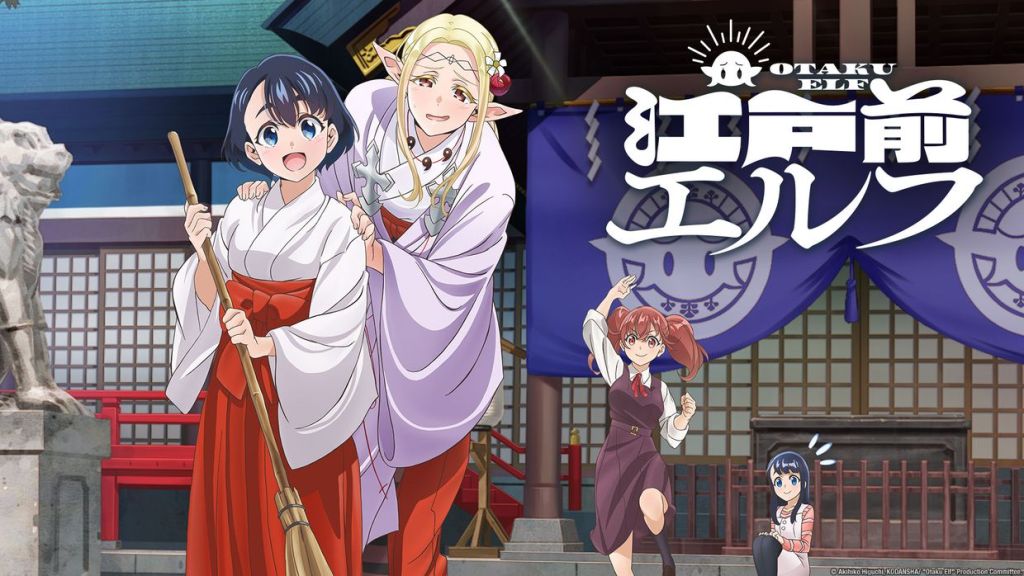
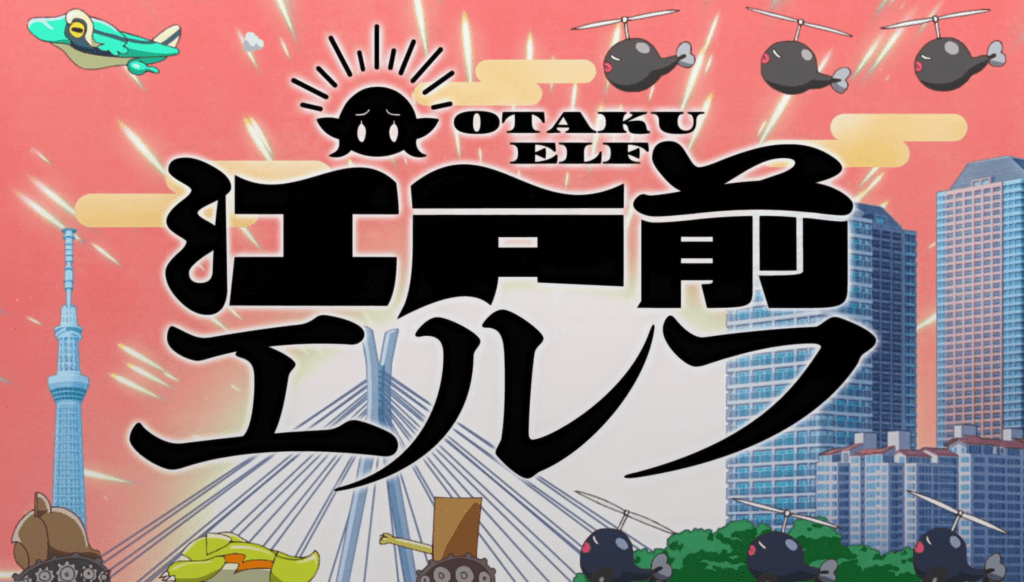
It’s not particularly uncommon for the English licence holder to change the original Japanese title to something clearer and/or more concise for the English audience — see, for example, how Ya Boy Kongming! is called Kongming of the Party People in Japanese.
The original title of Otaku Elf is “Edomae Elf.” Apparently, “Edomae” means “Tokyo-style”, with the double meaning that the Elf in question both lives in Tokyo (previously called Edo) and arrived there in the Edo period. Otaku Elf is perhaps less clever, but also has the benefit of both not being based on a Japanese pun most English people aren’t going to understand and clearly establishing that the Elf is question is a colossal nerd.
More on that later. Well, right now…
Now, you’d probably except an immortal Elf summoned from another world to serve as Tokyo’s guardian deity to be elegant and regal and dignified in such a way as to befit a goddess. And, yeah, that’s how the local community under the protection of Takamimi Hime no Mikoto believes their patron goddess to be.
Quick sidebar: “Takamimi Hime” means something like “Lady Tall-Ears” and “no Mikoto” is a suffix applied to the names of Japanese gods to indicate that they’re divine figures and means something like “the Exalted One” or “the Divine.” Taken all together, the name means something like “Her Majesty, the goddess of Tall-Ears Shrine.”
Takamimi Hime’s real name is Elda and past that dignified exterior Elda is basically just a colossal nerd and total shut-in — helped, of course, by the fact that the only person allowed inside the temple’s inner sanctuary is Elda’s shrine maiden Koito.
She stays up all night binging video games and/or anime. She collects limited edition anime figurines. She does all of her shopping online so she doesn’t have to talk to people. She does Gunpla. A kid made fun of her ears 60 years ago and took it so poorly she hasn’t gotten over it or wanted to leave the shrine ever since.
Like I said, I was sitting there reading the manga feeling personally attacked…
Otaku Elf is actually one of the few manga-turned-anime where I actually read the manga first. I’d been aware of the anime since it debuted in the Spring of 2023, but put off watching it because it never got dubbed into English. Look, I’m not trying to start some stupid Sub vs. Dub slapfight here, but my personal preference is for dubs, so I can multitask more easily and watch while I’m doing something else.
Like, for example, writing the blog you’re reading right now.
Or doing Gunpla.
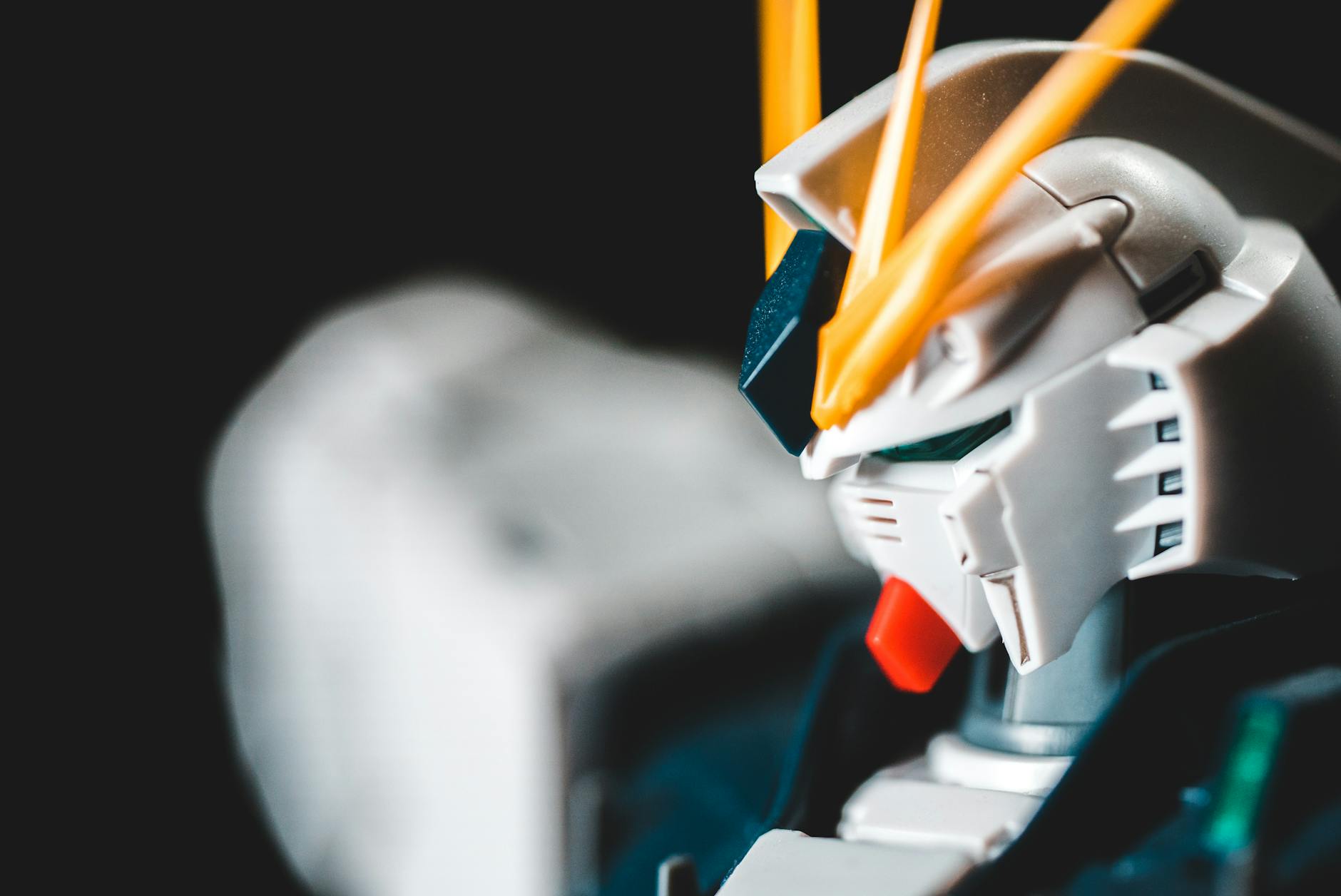
and the only Japanese model kit I’ve built was an Escaflowne that
I bought because I thought it was an action figure…
Photo by Erik Mclean on Pexels.com
Or avoiding talking to people…
And, well, events conspired for me to have some time to kill at the library while my parents were buying a new rug. Which, to be fair, really ties the room together. This was, incidentally, the same library trip that was also my introduction to the eminently enjoyable Fantasy story Goblins. I was looking through the manga section and found the first three volumes of Otaku Elf.
Worth noting that while the anime only got one season in 2023, the manga is still running as the time I wrote this post. Also worth noting that the anime’s haunty opening theme is super-duper catchy:
Feeling personally attacked aside, I’ve actually really enjoyed both versions of Otaku Elf.
Very little happens and most of the storylines are very much focused on mundane, everyday things, but it’s undeniably funny to see an Elf who’s ostensibly a goddess throwing a tantrum because Koito won’t let her drink another Red Bull (whereupon, she will drink a Monster, which is, of course, substantially different from a Red Bull) or get mad because she randomly drew a common figurine and she needs the rare one to complete her collect — or learn after the fact that the entire community came together to rig a lottery specifically so Elda is guaranteed to get the rare prize.
The particularly interesting aspect of Otaku Elf is that since Elda has been in Tokyo for 400 years, she has plenty of opportunities to talk about Tokyo has changed in that time in terms of culture and society. Of course, since she’s been an obsessive nerd that whole time, she has a lot of say about the various hobbies and pastimes that were popular in previous centuries, which does provide some pretty interesting historical tidbits.
The series introduces two other Elves also summoned by prominent figures of Japanese history to be the guardian deities of their domains. Like Elda, Yord and Haira’s shrine names refer to their ears: Yord is “Hiromimi” (Long-Ears) and Haira is “Uramimi” (Beautiful Ears).
This introduces some Compare & Contrast-based humour, since Yord and Haira have personalities that are completely different from Elda’s but are nevertheless at least as neurotic as Elda is. And their own put-upon mikos like Koito.
Yord is significantly more outgoing than Elda, but despite being older than Elda (by a year), she’s the most childish and immature (and shortest) of the three Elves. Haira is the oldest of the three and the most outwardly dignified but has major issues with gambling and her facade slips pretty quickly when she’s trying to hit people up for money.
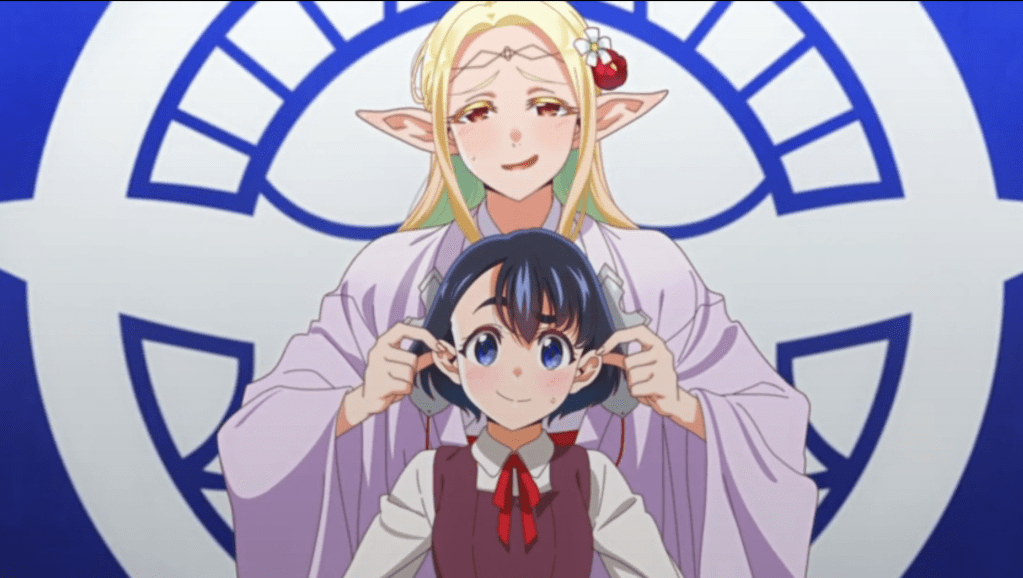
Despite the fact that Otaku Elf is predicated on the dynamic between Elda and Koito leading to lots of funny moments, there’s actually a subtle but lingering sense of bittersweet melancholy just under the surface. Basically, since Elda is 400 years old and immortal, all of the human characters will be born, grow up, get old, and then die while she doesn’t really age or change.
For the most part, the series actually uses that fact to demonstrate how important Elda is to the community. While all of the humans living around the temple be born, grow up, get old, and then die, Elda will always be there at the heart of the community, providing a familiar presence and sense of continuity dating back 400, uniting the community both among its currently-living members and to their ancestors.
It’s actually really profound and touching for what is otherwise a pretty goofy, low-stakes slice-of-life series.
As you may lean from the “I feel personally attacked” thread that’s been running through this whole post, it is really easy to read Elda as autistic, especially when you are yourself autistic (incidentally). And, like, I’m not saying that because my reaction to Elda is “Ha! Look at the weird nerd!”, I’m saying that because I’m watching Elda and thinking “She reminds me of me…”
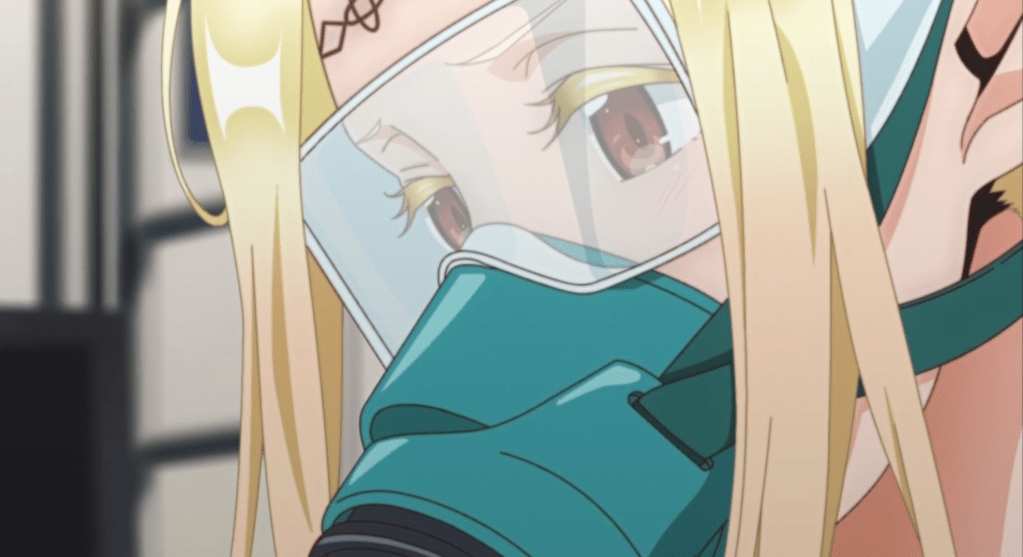
Also, can we take a minute to admire her safety precautions while working with aerosolised paints?
Otaku Elf: C2C and Sentai Filmworks.
Granted, there’s nothing that explicitly identifies Elda as autistic — not particularly surprising that she originally came from a Fantasy world that may not even have a concept of autism and has spent most of her time on Earth in an era where autism didn’t exist as a diagnosis (or where psychiatry existed as a discipline). Plus, there’s the fact that Elda probably never even want to see a psychiatrist for a diagnosis.
Again, fundamentally, Elda reminds me of me. And, yeah, a lot of the humour does come from Elda’s idiosyncrasies, but it never feels mean-spirited.
Plus, there’s the fact that Elda’s relationship with Koito is so central to the series. Even if Elda isn’t supposed to be actually autistic, I find it really moving that the series is doing so much to some how important it is for a character who’s at least autistic-coded enough to remind me of me to have a trusted best friend who sees, validates, and helps her.
It’s another aspect that’s shockingly profound and moving for an otherwise lighthearted series.
Now, if you’ll excuse me, I’m off to build models and not talk to people…
My other recommendations are available here.
And you can follow me here:
If you’ve enjoyed my content, please consider supporting me through Ko-fi or Patreon, or through Paypal by scanning the QR code below:
Follow Realmgard and other publications of Emona Literary Services™ below:
Subscribe to the Emona Literary Services™ Substack newsletter here.

This work is licensed under a Creative Commons Attribution-NonCommercial-NoDerivatives 4.0 International License.
The author prohibits the use of content published on this website for the purposes of training Artificial Intelligence technologies, including but not limited to Large Language Models, without express written permission.
All stories published on this website are works of fiction. Characters are products of the author’s imagination and do not represent any individual, living or dead.
The realmgard.com Privacy Policy can be viewed here.
Realmgard is published by Emona Literary ServicesTM
