My current plan is to post a week of Music to Write Realmgard to posts and then alternate to a week of Recommendations.
I’ve been just doing the Music posts from the beginning and working my way forward. I’m going to do the reverse for my Recommendations and start with the newest and work my way back.
Granted, this on isn’t actually my newest Recommendation post, but it did get posted most recently because I either forgot to add it to the list…
Original footage via WWE. Video via Tenor.
… or I needed to revise it so much that it ended up being an entirely different post.
Either way, here’s Disney’s Hunchback of Notre Dame.
You may be wondering what a Greatest Living Author watches when he’s not writing. Well, how about a surprisingly profound movie about the most famous church in the world?
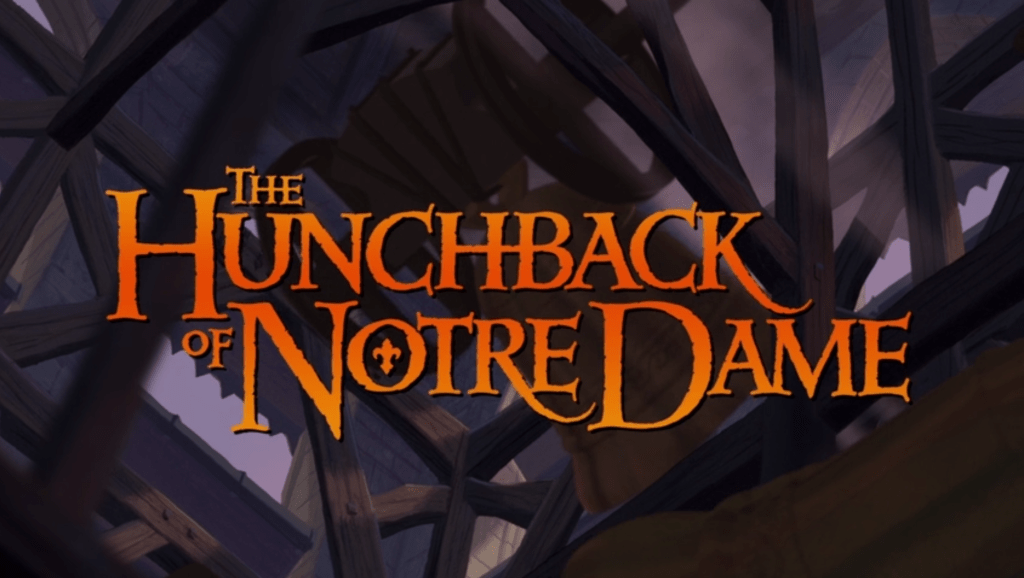
As you can see from that title card, I am referring, of course, to 1999’s Tarzan…
Obviously, that was a joke. Today, I’m going to be taking a look at Disney’s The Hunchback of Notre Dame — inspired, at least somewhat, my earlier recommendation of Gargoyles, due to it being yet another Disney cartoon with gargoyles in a prominent role.
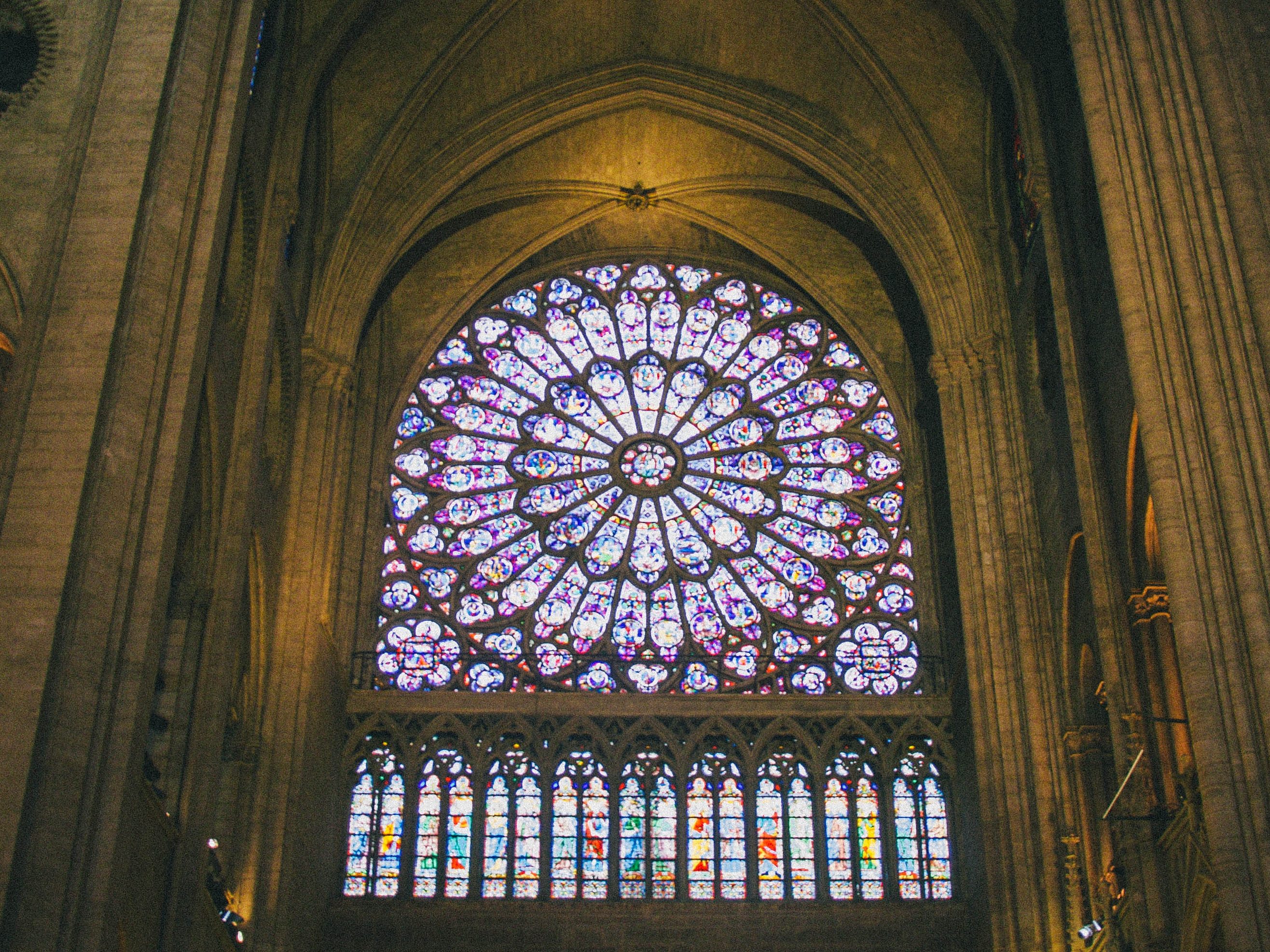
Photo by Huy Phan on Pexels.com
The Hunchback of Notre Dame is regarded as one of the better Disney movies, at least of the 90s. It’s also a fascinating watch from a thematic point of view, because of Disney’s commercial interest in being as broadly appealing and blandly inoffensive as possible.
It’s trying so hard to avoid saying anything meaningful or insightful about Religion — pro or con — but the movie is literally about a church, so it can’t quite manage to not say anything about Religion…
It’s probably not for nothing that the period between the late 80s and the Turn of the Millennium is called the Disney Renaissance.
Photo by Pixabay on Pexels.com
Disney closed out the 80s with The Little Mermaid. The early 90s gave us Beauty and the Beast (indisputably the best Disney movie and the first animated movie to be nominated for the Best Picture Oscar) and The Lion King. Meanwhile on TV, Disney gave us beloved cartoons like DuckTales, TaleSpin (clearly, they also had a thing against proper spacing and capitalisation…), Darkwing Duck, and, of course, Gargoyles.
So, basically, these are the Disney movies and shows my generation grew up with.

Photo by Skitterphoto on Pexels.com
It wasn’t necessarily a unequivocal golden age of unqualified successes. The Rescuers Down Under didn’t live up to studio expectations, and Pocahontas garnered a mixed reaction and proved controversial even at the time — something I imagine has only gotten worse in the intervening years given present-day discussions going on about racism, colonialism, and on-screen representation.
It’s probably not for nothing that there’s no indication that Disney is even going to attempt a live-action Pocahontas, despite remaking many of the 90s cartoons, and even remaking animated movies as recent as Moana (scheduled for release less than 10 years after the original).
Still, there was probably more good than bad during the period. That’s neither surprising nor difficult given that the worst movies of this period are still generally considered at least decent and that the best are viewed as some of the best animated movies ever.
Of course, that means that the ones that didn’t become instant classics tend to get overshadowed by the ones that did.
Which brings me to my current recommendation.
Let me get this out of the real quick: Disney’s The Hunchback of Notre Dame is not a good representation of the original novel.
Now, that Disney is playing fast and loose with the source material for the sake of making a movie palatable to modern tastes and appropriate for an all-ages audience isn’t exactly unprecedented.
Granted, most of these stories have multiple versions, but off the top of my head: Mulan dies in one version, the Little Mermaid dies (sort of; she ends up becoming, like, an air spirit that has a chance to become a real human), the Snow Queen is the antagonist, Cinderella‘s stepsisters get blinded and throw out onto the street, and I’m sure I’ve read about at least one version of the story where the Beast eats the evil sisters.
All that aside, Hunchback of Notre Dame plays especially fast and loose with the source material, to the point that the movie isn’t an adaptation, so much as a completely new story that happens to have the same name as a famous French novel.
Not, I suppose, unlike fellow 90s Disney adaptation of fellow 19th century French novel The Three Musketeers.
In brief: the only sympathetic character is the funny goat (yes, the goat is in the original book) and then everybody dies.
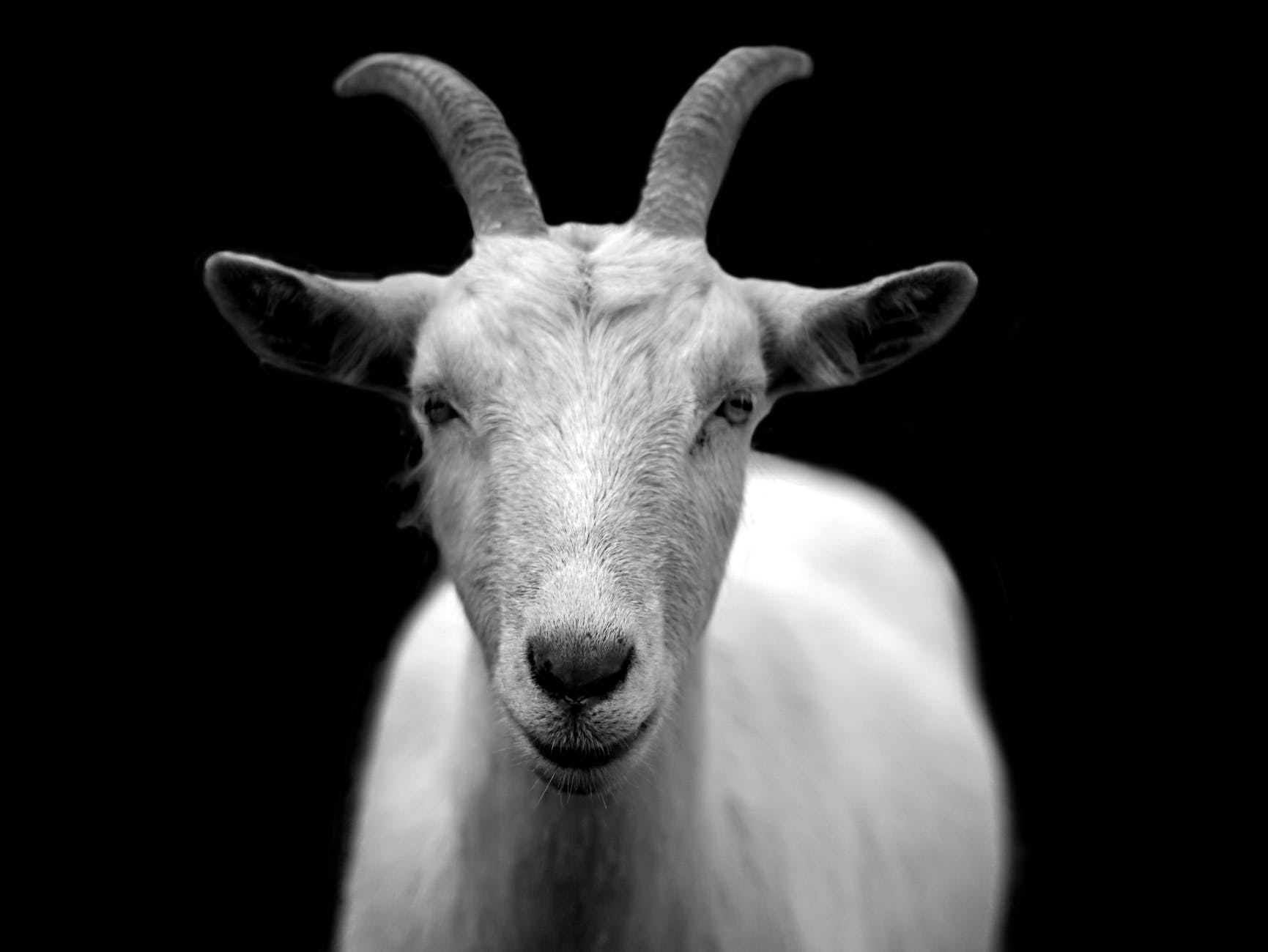
Photo by Pixabay on Pexels.com
It’s a real bummer.
Frankly, it’s a bizarre choice to adapted into an animated kid’s movie. But, yeah, Disney pulled it off. Not necessarily as an adaptation, but at least as a movie in its own right.
The movie starts off strong. The Bells of Notre Dame sequence is probably one of the most powerful, evocative opening sequences I’ve seen in a movie, and not just in a cartoon or a Disney movie.
None of the characters really resemble their counterparts in the original novel. Quasimodo is a misunderstood nice guy who’s ugly in the cutest way possible, rather than being basically a feral child. Quasimodo’s mother, despite having about an, oh, Bells of Notre Dame-worth of screentime, is sympathetic and by all accounts a good mother, rather than stealing baby Esmeralda and replacing her with Quasimodo (also thereby avoiding playing into a fairly unpleasant stereotype). Esmeralda is a strong, capable adult woman, rather than a hopeless, doomed teenage ingenue. Phoebus is a gallant, chivalrous true knight, rather than a self-centred jerk.
Frollo is kind of the opposite; he’s straightforwardly (if still realistically) evil secular judge who’s obsessed with Esmeralda, rather than a nuanced priest gradually losing his sympathetic qualities (i.e. genuinely caring for his younger brother and being less openly hostile towards Quasimodo)… who’s obsessed with Esmeralda.
In the book, Frollo is the Archdeacon. In the movie, Frollo and the Archdeacon are two halves of a thematic whole — basically an abusive authority figure countered by a benevolent authority figure — but are two separate characters.
I suspect that choice is the result of not wanting the controversy that would inevitably follow if the one priest in the movie was a cackling supervillain.
However, the funny goat is basically still the same character.
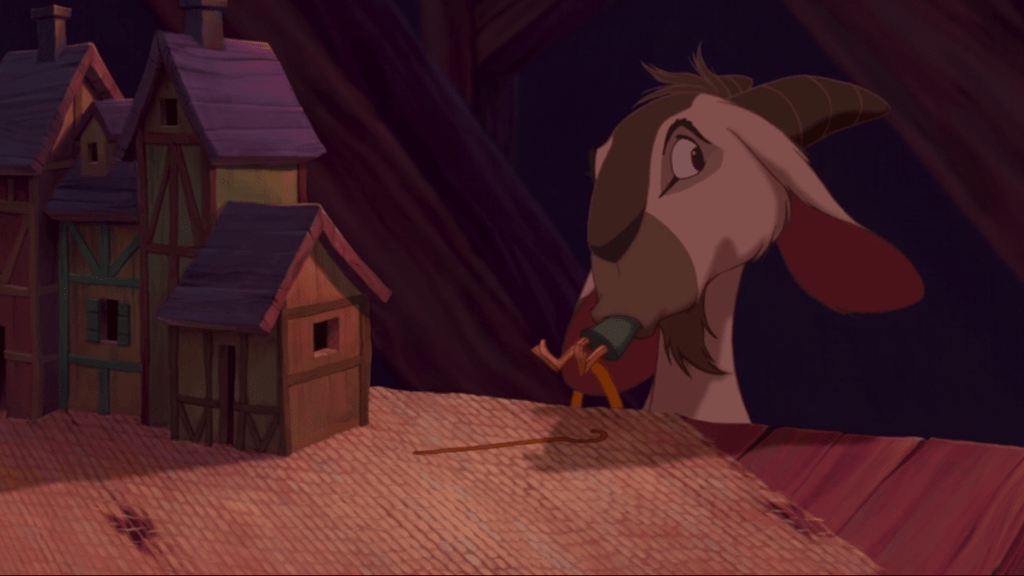
The Hunchback of Notre Dame: Disney.
No, seriously, the goat’s in the original novel.
Again, not a great adaptation, but it works. At the very least, it fixes the novel’s biggest problem: that there really are no sympathetic characters. In the book, the goat is the most likeable character…
Like I said, Hunchback is trying to be as bland, broadly- appealing and inoffensive as possible. Which means it’s trying really, really hard not to be a religious movie. But, it’s a movie about a church – worth noting: in the original French, the title of the novel is Notre-Dame de Paris, emphasising how central the church itself is to the story.
So, in the end, it can’t not be a religious movie.
It’s probably the most religious secular movie I’ve ever seen. It is, for example, the only Disney movie I can think of where “The Man comes around” is a recurring thematic statement.
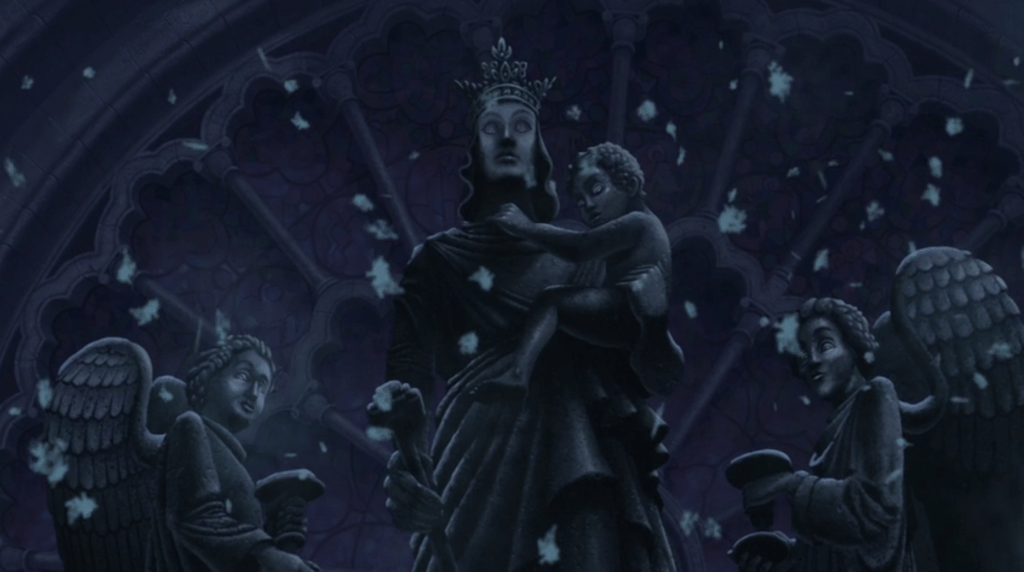
The Hunchback of Notre Dame: Disney.
If you’ve spent any time in or around a Catholic church, you’re going to recognise some of the movie’s musical cues: the Kyrie, the Confiteor and lot of bombastic, overawing Latin chant feature into the soundtrack.
And it’s not for nothing the Dies Irae is probably the most frequently-recurring musical cue in the movie.
Notably, the translation of the Latin of the Dies Irae mentions “the Judge” at length. Given how the movie plays out, it’s basically referring to Frollo — Judge Frollo, as you’ll recall.
As is the case with a lot of the 90s-era animation I’ve been recommending, it’s clear that animation techniques have come a long way since then. It’s not necessarily that the animation hasn’t held up — for the most part, it has; I’ve noticed the odd issue with the character designs and movements, but nothing hugely distracting. It’s just that the past three decades have brought advancements that allow animators to do more work more efficiently.
The backgrounds have consistently blown me away. There’s something about the art style and the colour saturation that makes most of the backgrounds feel like paintings. In particular, the amount of detail on Notre-Dame itself is amazing.
Granted, I don’t know enough about Notre-Dame’s actual architecture to know if it’s accurate, but even if it isn’t, it still looks cool.
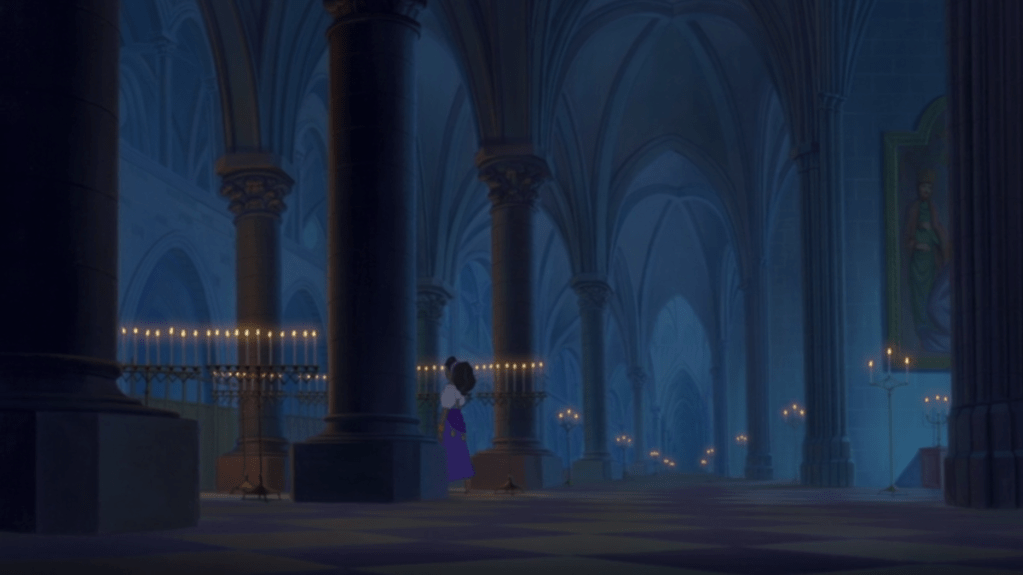
Like I said at the top of this post, Hunchback of Notre Dame didn’t go down as an instant classic. It still isn’t quite as popular as the best-beloved films of the Disney Renaissance era, but it has earned a lot of praise with the the benefit of the intervening three decades.
Frollo’s a corrupt authority figure hiding behind religion (though, again, as a secular judicial figure, not using institutional religion) to oppress the minorities and lower classes of Paris. Esmeralda basically spends the entire movie being objectified as a woman, in addition to facing prejudice as a minority. Quasimodo just wants a friend, but is viewed as a monster. Phoebus is trying to do the right thing, even though his superiors (i.e. Frollo) are corrupt authority figures hiding behind religion.
Yeah, that’s not relatable at all…
There’s a lot of pretty mature subject matter going on here. Given the movie’s religious bent and recurring symbolism, there are fairly frank discussions about salvation and damnation — insofar as such a heavy, inevitably controversial topic is possible in a Disney movie.
It’s dark, it’s grim. It’s resonant. And that’s probably why The Hunchback of Notre Dame has earned the reputation it has.
Also, Hellfire (starts at about 2:10 in that video) is an awesome song. Both musically and theologically.
On the one hand, it does kind of have an identity crisis. It’s a dark Disney movie, but it’s still a Disney movie, so it’s still trying to appeal to as broad a demographic as possible and include kid-friendly humour, perhaps to its own detriment.
There’s a good deal of humour, plenty of it legitimately funny and well-executed — Phoebus giving his horse the command “Achilles, heel!” is a brilliant joke. In that case, most of the humour is clever-funny, rather than silly-funny.
But also, Quasimodo has a trio of funny gargoyle sidekicks to provide levity and juvenile humour. They’re silly-funny. That works less well. The fanbase has attempted to reconcile this incongruity by putting forth the theory that the gargoyles are basically Quasimodo’s imaginary firends.
It’s a dark movie, but then everything works out in the end. Unlike the book. Where basically everybody but the goat dies.
Sure, there’s maybe a certain unfortunate implication of “ugly guys can’t get the girl.”
But, probably more significantly, Quasimodo himself is the one who ultimately sets up Esmeralda and Phoebus, because he does what’s best for his friends.
And, obviously, that platonic friendships are also important is not a terrible message to deliver.
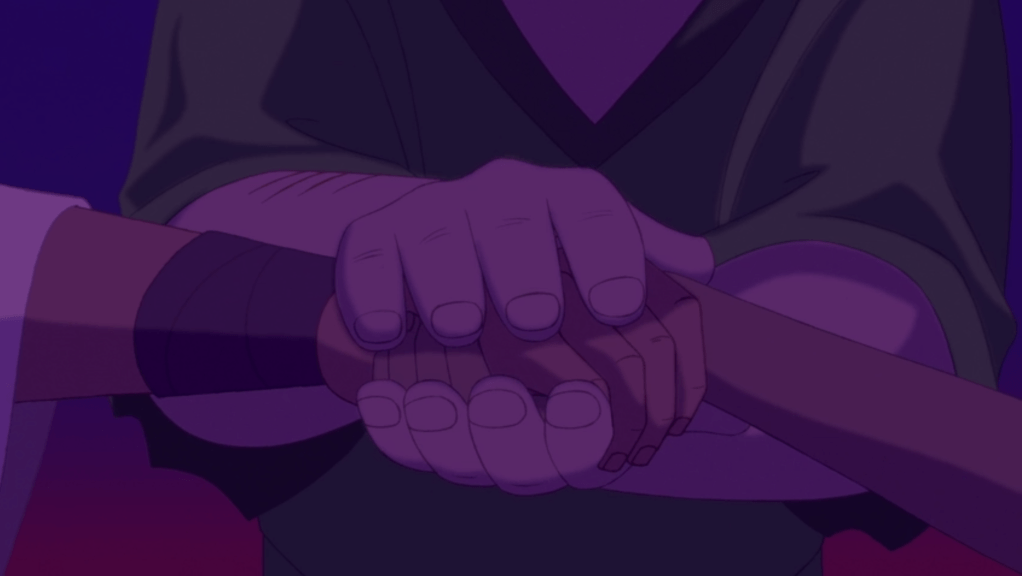
The Hunchback of Notre Dame: Disney.
Plus, he gets a girlfriend in the sequel.
Yeah. There was a sequel.
There were a lot of direct-to-video Disney sequels in the 90s…
You can find the rest of my recommendations here.
And you can follow me via social media or my email list here:
If you’ve enjoyed my content, please consider supporting me through Ko-fi or Patreon, or through Paypal by scanning the QR code below:
Follow Realmgard and other publications of Emona Literary Services™ below:
Subscribe to the Emona Literary Services™ Substack newsletter here.

This work is licensed under a Creative Commons Attribution-NonCommercial-NoDerivatives 4.0 International License.
The author prohibits the use of content published on this website for the purposes of training Artificial Intelligence technologies, including but not limited to Large Language Models, without express written permission.
All stories published on this website are works of fiction. Characters are products of the author’s imagination and do not represent any individual, living or dead.
The realmgard.com Privacy Policy can be viewed here.
Realmgard is published by Emona Literary ServicesTM
